Photo by: Strange Happenings via Pexels
TL;DR: Accounting transactions are first recorded in the accounting journal, universally designated as the book of original entry. Every financial event is documented chronologically with balanced debits and credits derived from verified source documents before being posted to the general ledger. Modern Enterprise Resource Planning (ERP) systems automate this data ingestion through digital subledgers, but the structural requirement to create an immutable, sequential audit trail remains mandatory under US GAAP and Sarbanes-Oxley internal control frameworks.
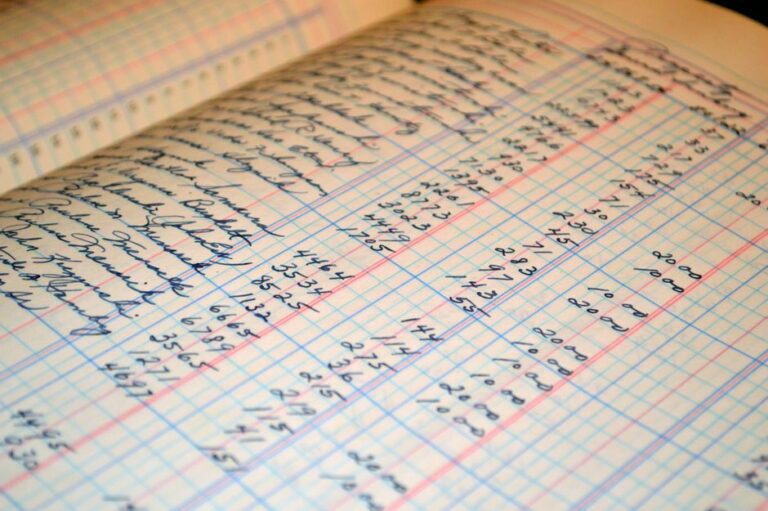
The short answer to where accounting transactions are first recorded is the accounting journal. Long before a financial figure reaches the general ledger, and well before it is summarized on a balance sheet or income statement, it must be documented sequentially in what accountants designate as the book of original entry (or book of prime entry). Today, that record is rarely a bound paper daybook; enterprise finance teams now manage transaction streams through automated cloud software. The technology has evolved, but the foundational principle has not: every recordable economic event begins with a chronological journal entry backed by objective evidence.
- Manual entry reduction: Corporate accounting teams spend less than 15% of their working hours on manual journal entry, down from over 45% a decade ago (Institute of Management Accountants, 2024).
- Tax recordkeeping window: 3 years from the date of tax return filing for standard receipts, invoices, and source documents (IRS Publication 583, March 2026).
- Audit workpaper retention: 7 years for public company audit documentation and journal entry logs (PCAOB Auditing Standard AS 1215, 2026).
- Triple-entry DLT projection: Up to 30% of global enterprises are projected to deploy multi-party distributed ledger validations for transaction recording by 2032 (MIT Sloan School of Management, September 2025).
- Where Are Accounting Transactions First Recorded in Modern and Traditional Bookkeeping?
- Journal vs. Ledger vs. Chart of Accounts: What Is the Difference?
- The Five Traditional Books of Original Entry Explained
- How Modern ERP and AI Automate Transaction Recording
- Why You Cannot Skip the Journal: Audit Trails and Internal Controls
- Future Outlook: Triple-Entry Accounting on Distributed Ledgers
- Frequently asked questions
- Conclusion
Where Are Accounting Transactions First Recorded in Modern and Traditional Bookkeeping?
An accounting journal is a chronological financial record that captures the initial entry of a business transaction, detailing dates, affected account titles, balanced debit and credit values, and supporting narrations, according to the Financial Accounting Standards Board (FASB) (2026).
Timing precision is essential when establishing where accounting transactions are first recorded. The transaction date represents the exact calendar day the economic exchange occurred, such as the delivery of inventory or the issuance of a client invoice. The recording date (or entry date) reflects the timestamp when the bookkeeper or automated accounting system logged the balanced entry into the journal. The posting date indicates the subsequent moment when those journalized amounts were transferred to individual account pages in the general ledger. Maintaining these distinct timestamps ensures strict compliance with the accrual accounting revenue recognition principle.
Journal entries cannot be created without verified objective evidence. Under standard double-entry bookkeeping, every journal transaction originates from source documents. Common source instruments include sales receipts, supplier invoices, purchase orders, payroll registers, bank deposit slips, and electronic payment confirmations. In cash vs accrual accounting, these source documents establish whether revenue has been earned or liabilities incurred, providing the factual verification required to support every journal entry during an audit.
(The standard-setters did not make this sequence rigid out of love for paperwork. They recognized that without an immutable chronological log, auditing a company’s balance sheet would resemble an expensive guessing game.)
Journal vs. Ledger vs. Chart of Accounts: What Is the Difference?
Accounting students and exam candidates frequently encounter multiple-choice questions asking: “A transaction can first be found in the accounting records in the: a) Journal, b) Income Statement, c) Chart of Accounts, d) Balance Sheet.” The answer is always the journal. To understand why, one must understand how financial data flows through distinct accounting instruments.
| Accounting Record | Primary Nature | Organization Method | Role in Accounting Cycle |
|---|---|---|---|
| Accounting Journal | Book of Original Entry | Strictly chronological (by date and time) | Initial capture of transactions with balanced debits and credits |
| General Ledger | Book of Final Entry | Categorical (by specific account code) | Accumulates running debit/credit balances for trial balance preparation |
| Chart of Accounts | Account Directory / Master List | Systematic numbering (Assets, Liabilities, Equity, Revenue, Expenses) | Defines available account codes and categories without storing balances |
| Financial Statements | Summary Reporting (P&L, Balance Sheet) | Standardized financial presentation (GAAP / IFRS) | Aggregates ledger totals for external investors and regulators |
A general ledger cannot function without the journal. If a company entered transactions directly into ledger accounts, the chronological context of the transaction would be lost. You would see that Cash decreased by $5,000, but you would have no sequential record showing whether that cash paid a vendor, purchased equipment, or distributed an owner dividend.
The Five Traditional Books of Original Entry Explained
Traditional accounting systems separate high-volume repetitive transactions into specialized subsidiary journals to prevent the general journal from becoming cluttered. In traditional bookkeeping, there are five primary books of original entry:
- Sales Journal: Used exclusively for recording credit sales of merchandise or services to customers.
- Purchases Journal: Used exclusively for recording credit purchases of inventory and operational supplies from vendors.
- Cash Receipts Journal: Captures every inbound cash flow, including cash sales, accounts receivable collections, and loan proceeds.
- Cash Disbursements (Payments) Journal: Records all outbound cash payments, check disbursements, and electronic wire transfers.
- General Journal: Serves as the universal book of prime entry for non-routine events, including depreciation adjustments, asset purchases financed by loans, and period-end closing entries.
A standard general journal entry follows a precise two-column format with equal debits and credits, as established in the foundational language of business:
| Date | Account Titles and Description | Debit ($) | Credit ($) |
|---|---|---|---|
| 2026-08-15 | Office Equipment | 5,000.00 | |
| 2026-08-15 | Accounts Payable (TechSupply Corp) | 5,000.00 | |
| (Narration) | (To record purchase of workstations under Invoice #8841) |
How Modern ERP and AI Automate Transaction Recording
The mechanism of where accounting transactions are first recorded has transitioned from manual ink-and-paper daybooks to automated cloud repositories. When a retail customer taps a credit card at a Point-of-Sale (POS) terminal, an application programming interface (API) instantly creates a background journal entry in cloud ERP software like NetSuite or SAP. The transaction debits Cash Clearing and Merchant Processing Fees while crediting Sales Revenue in fractions of a second.
Modern accounting firms using AI deploy optical character recognition (OCR) and machine-learning models to scan inbound PDF invoices, match line items against purchase orders, and pre-populate journal entries automatically. According to enterprise implementation data, automated invoice parsing cuts transaction processing time by over 70% compared to legacy manual data entry.
Automation that skips the review step is not automation — it is risk transfer. The liability does not disappear simply because an algorithm generated the debit and credit. In production environments with legacy chart-of-accounts configurations, automated rules engines can misclassify complex contracts or duplicate transaction lines if an API webhook retries after a network timeout. Professional finance teams establish automated threshold gates that route unusual journal entries to controllers for human verification before posting.
Why You Cannot Skip the Journal: Audit Trails and Internal Controls
A business cannot skip the journal and post directly to general ledger accounts. Under US GAAP and internal control mandates codified in Section 404 of the Sarbanes-Oxley Act (SOX) of 2002, bypassing the journal destroys the chronological audit trail required to detect unauthorized transactions or fraudulent record tampering.
External auditors conduct dedicated Journal Entry Testing (JET) under PCAOB Auditing Standard AS 2401 and AICPA AU-C Section 240. Because manual journal entries bypass automated system controls, auditors scrutinize journal logs for high-risk characteristics, including round-dollar entries, weekend postings, and entries made by unauthorized user profiles.
Professional auditors on Reddit r/CPA frequently summarize audit testing with the rule: ‘Vouch down for existence, trace up for completeness.’ When testing revenues, auditors take recorded ledger entries and vouch down to original journal vouchers and source invoices to ensure sales are not overstated. When testing liabilities, they trace source vendor bills up into the journal to ensure expenses are not omitted.
Reddit r/CPA
The technology will keep evolving, but the need to reconcile ledger numbers against real source documents will remain constant. That reality is reassuring for financial transparency, even as automation tools take over routine bookkeeping mechanics.
Future Outlook: Triple-Entry Accounting on Distributed Ledgers
The concept of a centralized private journal is evolving as corporate finance explores cryptographic validation. Research conducted at the Massachusetts Institute of Technology (MIT) in September 2025 indicates that enterprise adoption of triple-entry accounting via blockchain networks could streamline intercompany reconciliations across global supply chains.
In a triple-entry framework, when an accounting transaction is first recorded, it is posted simultaneously to the buyer’s internal journal, the seller’s internal journal, and an immutable distributed ledger shared between trading counterparties. The transaction is cryptographically signed, timestamped, and instantly verifiable by regulatory bodies like the U.S. Securities and Exchange Commission (SEC), eliminating the need for periodic post-close bank reconciliations.
Frequently asked questions
Conclusion
Accounting transactions are first recorded chronologically in the journal, providing the primary evidentiary bridge between raw source documents and summarized financial statements. Whether documented in a traditional five-journal manual system or processed instantaneously through a modern cloud ERP pipeline, the journal remains the indispensable book of original entry. Maintaining strict sequential records is not merely a bookkeeping habit; it is the core internal control that protects audit integrity, ensures GAAP compliance, and keeps financial reporting reliable.
About the Author