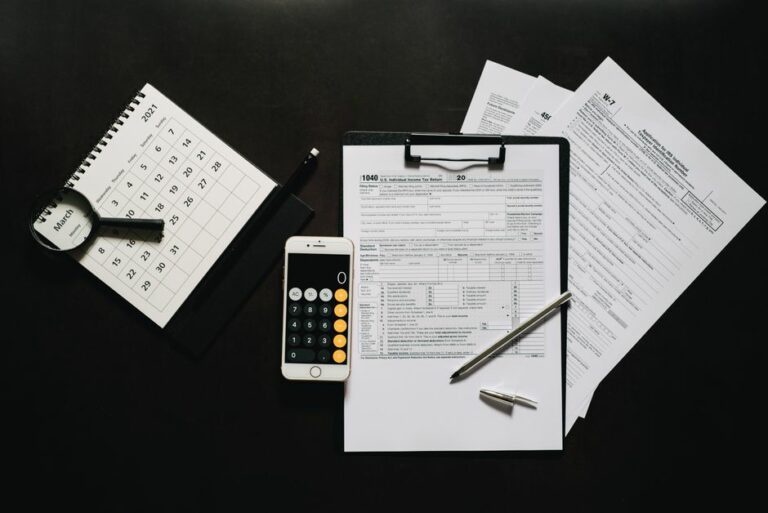
Photo by: Pavel Danilyuk via Pexels
TL;DR: Are accountants being phased out? No, accountants are not being phased out. The accounting profession is facing a structural talent shortage rather than declining demand, with the U.S. Bureau of Labor Statistics projecting 5% employment growth and roughly 124,200 annual job openings through 2034. While routine bookkeeping and transactional data entry are automated by software, demand for strategic advisory, tax planning, and fiduciary audit oversight is expanding.
The persistent question of whether accountants are being phased out stems from anxiety over artificial intelligence and automated ledger tools. In practice, technology is eliminating low-level clerical data entry rather than the professionals who interpret financial results. Organizations are adopting automated platforms to bridge a severe talent deficit caused by accelerating retirements and a shrinking pipeline of new Certified Public Accountants (CPAs). Below, we examine the latest employment data, how corporate teams deploy AI without creating audit liability, and the specific technical competencies required to future-proof an accounting career.
- Are accountants being phased out? Why labor market data contradicts the automation panic
- How accounting firms deploy AI tools to bridge the talent shortage
- Where automation eliminates data entry and creates fiduciary audit risk
- How to build a future-proof accounting career in an automated market
- Frequently asked questions
- Read next
Are accountants being phased out? Why labor market data contradicts the automation panic
An accountant is a licensed or degreed financial professional who analyzes records, ensures regulatory compliance, and provides strategic financial guidance, according to the U.S. Bureau of Labor Statistics (BLS) (May 2025).
Employment data contradicts the premise of an industry contraction. The BLS projects employment for accountants and auditors will grow 5% from 2024 to 2034, generating approximately 124,200 annual openings. Rather than shrinking headcount, accounting departments are managing a structural supply cliff across North America.
- Median Annual Wage: $83,680 per year (U.S. Bureau of Labor Statistics, May 2025)
- Annual Job Openings: 124,200 projected openings each year (U.S. Bureau of Labor Statistics, 2024–2034)
- CPA Retirement Cliff: Approximately 75% of active CPAs are Baby Boomers eligible for retirement (AICPA Trends Report, 2025)
- Workforce Attrition: Over 300,000 U.S. accountants exited the profession between 2019 and 2024 (Bloomberg, 2024)
The talent shortage ensures that demand for qualified professionals remains high, provided practitioners move beyond basic compliance. For professionals navigating compensation benchmarks, our guide on how to make 100k as an accountant details the career inflection points where advisory skills command premium salaries.
How accounting firms deploy AI tools to bridge the talent shortage
Firms are not investing in technology to eliminate headcount. Organizations deploy automated software because recruitment pipelines cannot supply enough staff to handle baseline client workloads.
| Organization / Vendor | Technology Deployed | Operational Impact |
|---|---|---|
| Deloitte | DARTbot (Omnia Ecosystem) | Accelerates technical GAAP and tax research while preserving human audit validation. |
| PwC | Risk Link AI Platform | Maps changing regulatory compliance frameworks directly to internal corporate controls. |
| Thomson Reuters | CoCounsel & Checkpoint AI | Reduces corporate tax return preparation cycle times by 50% to 70%. |
| Xero | Algorithmic Bank Feeds | Automates up to 80% of routine ledger categorization and transaction matching. |
Automated platforms allow finance teams to close corporate ledgers an average of 7.5 days faster while reducing manual reconciliation hours. This productivity multiplier helps firms absorb growing transaction volumes without burning out staff. Readers interested in enterprise implementations can explore our breakdown of accounting firms using AI in 2026 to review specific governance workflows.
Where automation eliminates data entry and creates fiduciary audit risk
The distinction between mechanical processing and professional judgment explains why the phase-out narrative fails. Transactional clerks who execute basic data entry face contracting roles because standardized rules are easily coded. Professional accountants, by contrast, navigate fiduciary accountability that software cannot assume.
An accounting team deploying AI agents to audit accounts payable aging and uncashed checks structured the tool exclusively to flag discrepancies for human investigation, avoiding automated ledger adjustments because unchecked algorithmic entries reliably generated reconciliation errors.
Reddit r/Accounting
Regulatory compliance requires personal accountability. Large language models and algorithmic matching engines frequently hallucinate statutory tax rules or misinterpret complex contracts. An automated system cannot sign a Form 10-K, defend an audit before the Public Company Accounting Oversight Board (PCAOB), or submit an IRS return under penalty of perjury. Human accountants must perform fiduciary-grade validation to verify that machine outputs reflect economic reality.
Understanding how automation fits into broader career progression is essential for both analysts and managers. Review our analysis of the accounting career path to see how audit oversight responsibilities expand from staff associate to partner.
How to build a future-proof accounting career in an automated market
Building a long-term career requires developing skills that machines cannot replicate. Professionals should concentrate development across three core competencies:
- Data Analytics & Visualization Literacy: Build proficiency in Microsoft Power BI, Tableau, and SQL to transform multi-source financial exports into executive dashboard models rather than manually consolidating static spreadsheets.
- Algorithmic Validation & Prompt Auditing: Learn to prompt and critically audit financial language models for variance explanations, footnote disclosures, and contract lease extraction. The professional’s core role is to audit the system’s output.
- Strategic Advisory Communication: Translate technical variance calculations and tax implications into clear operational choices for non-financial leadership. (A skill that takes roughly the same patience as explaining a tax depreciation schedule to a board member reviewing slides on a phone.)
Professionals transitioning into the field without traditional degrees can consult our guide on how to learn accounting on your own to master foundational debit-credit mechanics before advancing to automated reporting tools.
Editorial Opinion: AI will not replace accountants. It will, however, replace accountants who do not understand AI. The talent pipeline problem is real, and the profession created it through the high entry cost of the 150-hour CPA requirement, which contributed to CPA candidate volumes dropping over 25% between 2016 and 2023 according to AICPA data. For accountants who master automated tooling, the structural supply shortage creates significant professional advantage.
Frequently asked questions
The technology will keep changing. The need to reconcile it against reality won’t. That’s either reassuring or exhausting, depending on your relationship with Excel.
Audit your workflow before adopting new automation. Review your current month-end close procedures to identify repetitive ledger coding tasks suitable for automation, while maintaining mandatory human sign-off gates for all balance sheet reconciliations.
Read next
- Will AI Replace Accountants? The Data on Jobs and Automation — if you want to compare macroeconomic job displacement data across finance sectors.
- Accounting Firms Using AI in 2026: Tools and Examples — if you are designing internal review gates for enterprise accounting tools.
- Can Accountants Make $100K? 2026 Salary Paths by Role — if you are mapping your career trajectory toward advisory and managerial compensation bands.
About the Author