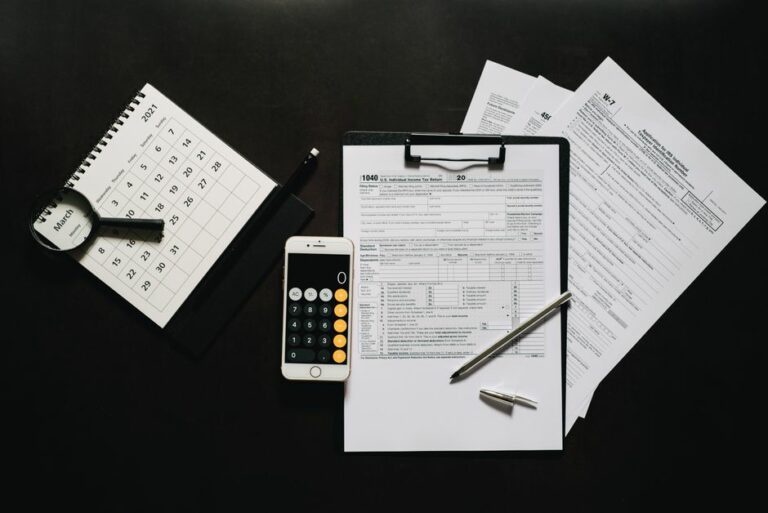
Photo by: Lukas Blazek via Pexels
The short answer is no, but the technology will replace professionals who refuse to adapt to modern software tools. The narrative that ai replacing accountants is imminent misunderstands both what artificial intelligence can do and what an accountant actually does. Machine learning excels at automating manual bookkeeping, extracting invoice data, and flagging anomalies in ledgers. It cannot, however, independently apply professional skepticism, evaluate management estimates, or assume legal liability for a financial statement.
The reality is that the financial sector is facing a severe labor shortage, not a surplus. Firms are deploying AI not to eliminate headcount, but to bridge the gap left by declining CPA exam candidates and an aging workforce. By automating routine compliance workflows, professionals are shifting their time toward strategic advisory—work that clients value and technology cannot replicate.
- Where automation eliminates clerical tasks and advances strategic professionals
- Why algorithms cannot sign an audit opinion
- Why the job market points to a labor shortage, not a surplus
- Frequently asked questions
Where automation eliminates clerical tasks and advances strategic professionals
The real impact of technology is a structural shift away from operational data collection. Historically, junior staff spent the majority of their early careers reconciling accounts and tying out balances. Today, software handles the extraction and matching, changing the entry-level job description from data entry to exception management.
This is the Moneyball moment for accounting—except the data is messier and the movie would be less exciting. As routine compliance workflows are streamlined, accountants are dedicating more time to higher-value consultative positions. An Accountancy Age market analysis from August 2025 revealed that 79% of practicing accountants anticipate growth in strategic advisory services within their firms. On average, these firms expect the volume of advisory consulting work to rise by 38% over the next few years.
| Traditional Focus | AI-Enabled Future |
|---|---|
| Data Entry / Bookkeeping (70% of time) | Strategic Advisory (70% of time) |
| Strategic Advisory (30% of time) | Model Governance & Audit (30% of time) |
The transition is not without friction. A firm running NetSuite badly is worse off than a firm running QuickBooks well. Implementation is not the finish line. The accountants who treat automation as a threat are generally the ones who built their value around the tasks being phased out. Those who embrace it are finding their analytical capabilities significantly expanded.
Why algorithms cannot sign an audit opinion
Accountants serve as the guardians of public and corporate financial trust. An AI model can look up historical data and identify variances, but it lacks a moral framework and legal standing. If a financial model creates an error, an algorithm cannot be held legally or criminally liable in a court of law. The liability doesn’t disappear because a machine made the entry; someone still has to own the output.
The Association of International Certified Professional Accountants (AICPA) has been clear: the legal accountability of signed financial statements must remain strictly with a human professional. Corporate boards, investors, and regulators like the U.S. Securities and Exchange Commission (SEC) require human professionals to guarantee compliance and manage risk.
This is especially true in complex environments like ESG reporting, where Scope 3 emissions data requires significant materiality judgments. The proliferation of sustainability frameworks demands human interpretation. A machine can aggregate the data, but the IFRS Foundation and other standard-setters expect a qualified professional to assess whether that data fairly represents the entity’s position.
(The technology will keep changing. The need to reconcile it against reality won’t. That’s either reassuring or exhausting, depending on your relationship with Excel.)
Why the job market points to a labor shortage, not a surplus
Fears of mass unemployment are contradicted by the actual macroeconomic data. The accounting profession is currently experiencing a historic labor deficit. Data from the AICPA/NASBA Trends Report shows a sustained decade-long drop in students sitting for the CPA exam, paired with an aging workforce retiring at rapid rates. The AICPA projects a deficit of 340,000 qualified accountants by 2030.
Because there are not enough humans to fill open positions, software tools are bridging the workforce gap. According to the U.S. Bureau of Labor Statistics, employment for accountants and auditors is projected to grow by 5% from 2024 to 2034. This expansion translates into roughly 124,200 annual job openings across the United States alone.
The talent pipeline problem is real and the profession created it. The 150-hour CPA requirement was designed to raise the bar, but what it actually did was push candidates toward law and finance, where the entry cost is lower. While the profession debates the solution, candidates are exploring career paths without a CPA or seeking out the highest paid controller roles. Automation isn’t taking their jobs; it’s making the remaining professionals exponentially more productive.
The standard is clear; the application is not. Technology is an accelerator, but professional judgment remains the brake pedal that keeps the enterprise out of trouble.
Frequently asked questions
About the Author