
Photo by: www.kaboompics.com via Pexels
For corporate accounting teams, the month-end close is a race against the calendar. The short answer to what accounts to reconcile monthly is that every high-velocity asset, liability, and clearing account on your balance sheet requires verification to protect internal controls and prevent financial reporting errors. In practice, this means systematically matching cash, operational payables, receivables, corporate credit cards, payroll tax liabilities, clearing accounts, and intercompany balances against independent source documents before locking the ledger.
Reconciliations are the first line of defense against both human error and systemic fraud. Without a rigorous verification process, minor transaction errors compound, bank feeds duplicate unnoticed, and financial reporting loses its integrity. Establishing a clear, repeatable close workflow ensures that variances are flagged and resolved long before the auditors arrive.
- The Core Accounts to Reconcile Monthly for Risk Mitigation
- Cash and Liquid Assets: Bank Accounts and Cash Equivalents
- Operational Liabilities: Accounts Payable and Credit Cards
- The Revenue Cycle: Accounts Receivable and Customer Deposits
- Payroll and Statutory Liabilities: Compliance and Tax Controls
- Clearing, Suspense, and Intercompany Reconciliation Controls
- Frequently asked questions
The Core Accounts to Reconcile Monthly for Risk Mitigation
In financial reporting, not all ledger accounts are created equal. High-velocity balance sheet accounts require continuous verification, while low-velocity equity or long-term liability accounts can often be verified quarterly or annually. Monthly reconciliations form the backbone of a company’s internal control structure, aligning with the guidelines set by the Committee of Sponsoring Organizations of the Treadway Commission (COSO) framework.
To maintain strong internal controls, organizations must enforce a strict segregation of duties between the team members who process transactions and those who perform the reconciliations. When a single individual handles both cash disbursement and bank reconciliation, the risk of undetected fraud rises exponentially. According to fraud data published by the Association of Certified Fraud Examiners (ACFE) 2024 Report to the Nations, billing schemes and check tampering schemes result in a median loss of ,000 per occurrence globally when internal controls are absent or bypassed.
An auditor on Reddit’s r/accounting community described discovering an arbitrary ,000 balance sheet “plug” in a client’s cash account. The previous bookkeeper, overwhelmed by variances, had simply forced the GL cash account to match the bank statement, masking three unposted vendor payments and duplicated customer deposits.
Reddit r/Accounting
Automation has streamlined the closing process, but it also introduces new risks. Many accounting departments treat automated bank feeds as a “set and forget” control. In practice, sync failures, duplicate feed imports, and incorrect automated GL mapping rules frequently mean the system reconciles incorrect data with absolute confidence. Verification remains a human review process—software accelerates the matching, but professionals must validate the exceptions.
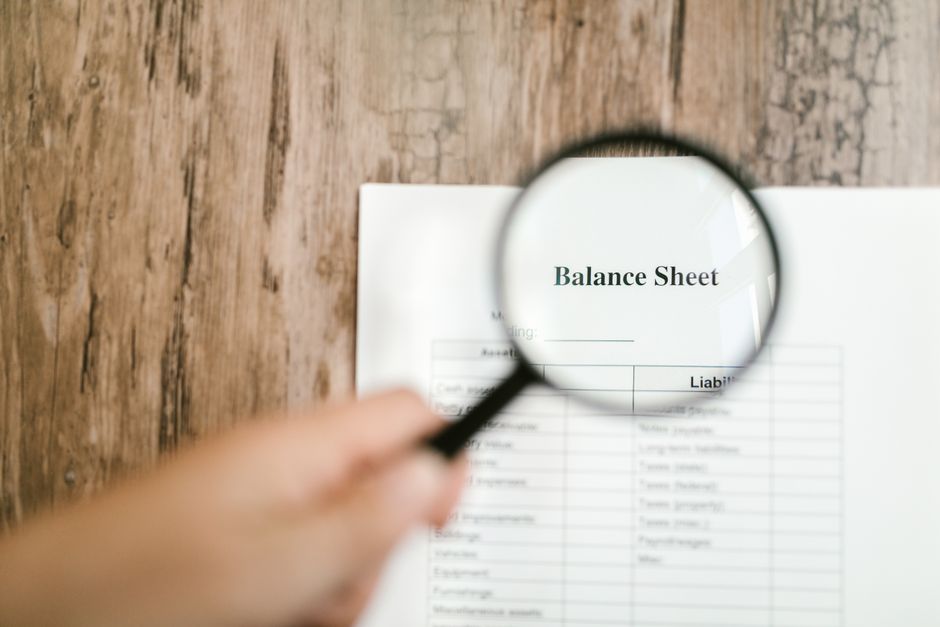
Cash and Liquid Assets: Bank Accounts and Cash Equivalents
Cash is the most liquid and sensitive asset on the balance sheet, making bank reconciliations the single most important close task. Every operational checking, savings, and money market account must be verified statement-by-statement. The goal is to identify timing differences, bank fees, and unauthorized transactions before closing the period.
Timing differences usually fall into two categories: outstanding checks (checks written and recorded internally but not yet cleared by the bank) and deposits in transit (cash received and recorded internally but not yet reflected on the bank statement). Resolving these items requires verifying that they clear in the subsequent month. Stale outstanding checks older than 90 days should be investigated and either voided or reissued to avoid unclaimed property compliance issues.
Petty cash accounts and undeposited funds clearing accounts must also be reconciled monthly. Petty cash reconciliations involve verifying physical cash counts against receipts, ensuring that the total cash plus receipts equals the established ledger balance. For digital ledger operations, verifying how accounting transactions are first recorded in the journal prevents double-counting undeposited credit card payments that remain stuck in payment processor clearing queues.
| Account Type | Primary Verification Focus | Key Metric / Target |
|---|---|---|
| Cash & Bank Accounts | Statements vs. Cash Book | < 5 Business Days to Clear |
| Accounts Payable (AP) | Vendor Statements vs. AP | 0% Duplicate Vendor Payments |
| Accounts Receivable (AR) | Aging Report vs. Deposits | Reduce DSO (Days Sales Outstanding) |
| Payroll Liabilities | Tax Filings vs. GL Ledger | 100% Statutory Compliance |

Operational Liabilities: Accounts Payable and Credit Cards
The Accounts Payable (AP) sub-ledger tracks the organization’s outstanding obligations to suppliers. An unreconciled AP ledger can hide unpaid liabilities, duplicate vendor invoices, and unauthorized spending. Controllers must reconcile the AP aging report against outstanding vendor statements monthly.
A benchmarks report published by the Institute of Financial Operations & Leadership (IFOL) in late 2024 showed that duplicate vendor invoices account for approximately 1.5% of all corporate disbursements globally. Reconciling vendor statements against the AP sub-ledger identifies these duplicates before payments are processed. This monthly verification also ensures that expenses are recognized in the correct period under the matching principle, avoiding year-end cutoff adjustments.
Corporate credit card statements represent a growing source of transaction leakage. Each corporate credit card must be reconciled statement-by-statement. Expense reports must be matched to receipts, and cardholders must account for every transaction. If cardholders fail to provide receipts, the transactions should hit a temporary employee receivable account rather than being plugged into miscellaneous expenses. (The “Ask My Accountant” account in QuickBooks is where transactions go to be forgotten, not resolved.)

The Revenue Cycle: Accounts Receivable and Customer Deposits
The Accounts Receivable (AR) sub-ledger represents revenue that has been recognized but not yet collected. Reconciling AR monthly involves matching the AR aging report against incoming cash receipts and customer invoices, verifying that deposits have been applied to the correct customer accounts.
Delinquency risks make AR reconciliations critical for cash flow management. According to research from the National Association of Credit Management (NACM) updated in March 2025, uncollected receivables older than 90 days lose up to 26% of their value due to write-offs and collection costs. Reconciling AR monthly allows teams to identify unpaid invoices early, initiate collections, and update the allowance for doubtful accounts based on realistic aging metrics.
Understanding the timing differences between cash vs accrual accounting is central to managing the revenue close. For companies receiving customer deposits or retainers, these cash inflows cannot be recorded as revenue immediately. They must sit in a customer deposit liability account and be reconciled monthly against active contracts, transferring to revenue only when performance obligations are met.

Payroll and Statutory Liabilities: Compliance and Tax Controls
Payroll is typically a company’s largest operating expense, carrying significant compliance and tax risks. Payroll reconciliations involve verifying that wages paid, employer taxes, employee withholdings, and benefit deductions match the summaries provided by payroll processors like ADP or Gusto.
Statutory liabilities, including federal, state, and local payroll taxes, must be verified against actual tax filings. Discrepancies in payroll tax accounts can lead to severe fines from tax authorities. An ADP regulatory review conducted in early 2024 revealed that 23% of mid-sized organizations faced compliance penalties due to discrepancies in quarterly local tax reporting. Monthly reconciliations of these liability accounts prevent compliance issues from compounding over multiple quarters.
In addition to tax withholdings, benefit clearing accounts for health insurance, pension contributions (401k), and employee stock purchase plans require close monitoring. The deductions taken from employee paychecks must match the payments made to insurance providers and plan administrators. Any variances must be cleared monthly to ensure that employee benefit plans remain fully funded and compliant with federal regulations.
Clearing, Suspense, and Intercompany Reconciliation Controls
Clearing and suspense accounts are designed to hold transactions temporarily until they are fully coded. In practice, they often become a repository for unmatched or problematic entries. If left unreconciled, clearing accounts like Goods Received Not Invoiced (GRNI) can hide unrecorded vendor liabilities or artificially inflate inventory assets.
Intercompany accounts are a significant source of close delays for multi-entity or multinational organizations. If a parent company in Chicago records a ,000 receivable from a subsidiary in Frankfurt, the subsidiary must record a corresponding ,000 payable. Any variance—due to foreign exchange translation rates, timing differences, or transfer pricing errors—will prevent consolidated financial statement generation and attract regulatory scrutiny. These balance sheet accounts must be reconciled and eliminated monthly.
The standard is clear; the application is not. For professionals climbing the corporate accounting career path, establishing control procedures over these complex accounts is a key differentiator. The opinion of the ACCWire editors is clear: reconcile your accounts monthly, not at year-end. Every CPA has a client who shows up in March with a shoebox of receipts and a year of unexplained transactions. The reconciliation cost at that point is five times what it would have been quarterly, and the errors are significantly harder to fix. Regular monthly checks protect your company, save resources, and ensure that your financial data is analytically useful.

Frequently asked questions
Understanding what accounts to reconcile monthly is critical for maintaining financial controls, preventing fraud, and ensuring accurate reporting. Prioritizing cash, payables, receivables, and payroll liabilities establishes a clear, auditable trail. The spreadsheets will stay messy if you don’t look at them. The auditors won’t ignore them. Start there.
About the Author