
Photo by: Kindel Media via Pexels
TL;DR: A Section 6418 clean energy credit transfer allows project developers to sell 11 eligible federal energy tax credits directly to unrelated corporate buyers for all-cash consideration. Finalized under Treasury Decision 9993, the cash received is tax-free to the seller and non-deductible for the buyer, creating an immediate 6% to 15% discount for corporate tax planning. Transfers require mandatory IRS pre-filing registration, a bilateral Transfer Election Statement, and cannot be executed on amended returns.
Executing a Section 6418 clean energy credit transfer has transformed corporate tax management and renewable energy financing across the United States. Established by the Inflation Reduction Act (IRA) and governed by IRC Section 6418, this statutory mechanism replaces archaic, high-fee tax equity partnership structures with liquid, bilateral cash transactions. Below: which 11 clean energy tax credits qualify for transfer, how the mandatory IRS pre-filing registration system generates property numbers, why cash consideration is completely tax-free to sellers, the rigid original-return election deadlines, and how Section 6418 transferability contrasts with Section 6417 direct pay elective payment rules.
Section 6418 clean energy credit transfers allow eligible taxpayers to elect an irrevocable transfer of all or any portion of specified federal energy tax credits to an unrelated taxpayer solely for cash consideration, according to the Internal Revenue Service (IRS) (April 2024).
- Statutory Authority: Internal Revenue Code (IRC) Section 6418 (IRS, April 2024)
- Governing Regulation: Treasury Decision 9993 (89 FR 34770, finalized April 30, 2024)
- Eligible Credits: 11 federal credits including Section 48 ITC, Section 45 PTC, and Section 45X manufacturing
- Consideration Requirement: Paid strictly in U.S. cash within statutory payment windows
- Tax Status: Cash received is excluded from seller gross income; buyer outlay is non-deductible
- How does Section 6418 clean energy credit transfer work?
- Which energy tax credits are eligible for transfer under Section 6418?
- What are the IRS pre-filing registration requirements?
- How is the cash consideration taxed for sellers and buyers?
- What are the transfer election rules and deadlines on the tax return?
- How does Section 6418 transferability compare to Section 6417 direct pay?
- Frequently asked questions
- Conclusion
- Read next
How does Section 6418 clean energy credit transfer work?
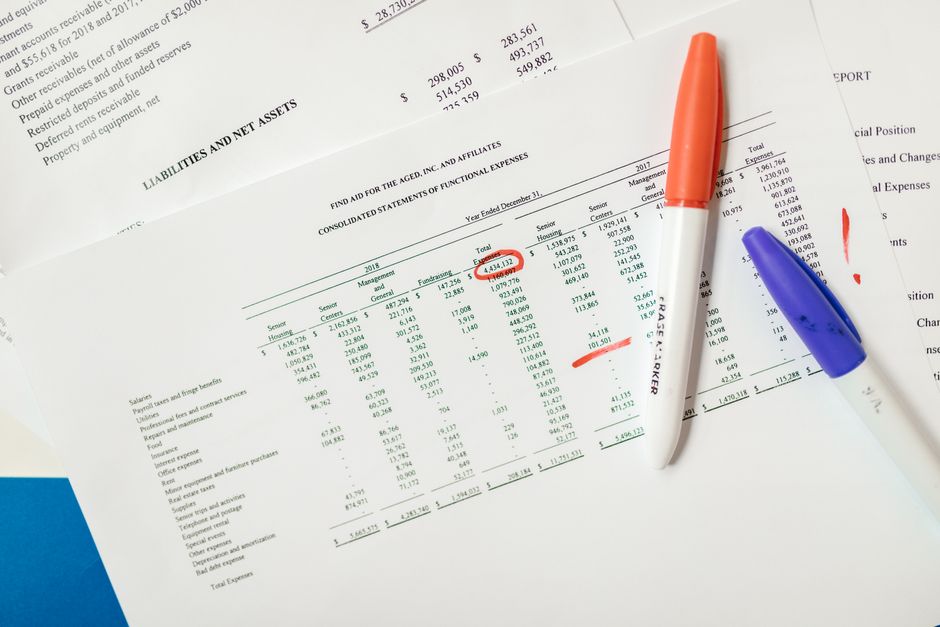
A Section 6418 clean energy credit transfer functions as a direct secondary market transaction where an eligible project developer (the transferor) sells federal energy tax credits to a taxable corporate buyer (the transferee) in exchange for cash. The corporate buyer applies the purchased tax credit directly against its federal corporate income tax liability on dollar-for-dollar terms.
Because clean energy developers often lack sufficient corporate income tax liability to absorb large Investment Tax Credits (ITCs) or Production Tax Credits (PTCs), they sell these credits at a negotiated market discount. Corporate buyers typically pay between $0.88 and $0.94 in cash for every $1.00 of face tax credit value, generating an immediate risk-adjusted yield of 6% to 14% on tax liabilities.
Section 6418 enables clean energy developers to monetize federal credits by selling them to corporate buyers at a 6% to 15% discount for cash.
The transaction is governed by a Tax Credit Purchase Agreement (TCPA) and formalized on IRS Form 3800 (General Business Credit) accompanied by a bilateral Transfer Election Statement (TES).
| Transaction Component | Transferor (Project Developer / Seller) | Transferee (Corporate Buyer) |
|---|---|---|
| Primary Role | Generates qualifying credit through clean energy asset | Purchases credit block to offset federal income tax |
| Cash Flow Direction | Receives cash consideration from buyer | Pays discounted cash amount (e.g., $0.91 per $1.00) |
| Tax Character of Cash | 100% tax-free (Excluded from gross income under §6418(b)(2)) | Non-deductible capital outlay under §6418(b)(3) |
| Recapture Exposure | Obligated under contract to indemnify against project failure | Statutory primary liability under Treasury Decision 9993 |
| Tax Form Requirements | Form 3800 + Source Credit Form (e.g., Form 3468 / 8835) + TES | Form 3800 + Attached Transfer Election Statement (TES) |
Which energy tax credits are eligible for transfer under Section 6418?

Under IRC Section 6418(f)(1), Congress designated 11 specific federal tax credits as eligible for transfer. These credits span renewable power generation, energy storage, hydrogen, carbon capture, and clean manufacturing:
- Section 30C: Alternative Fuel Vehicle Refueling Property Credit
- Section 45: Renewable Electricity Production Credit (PTC for wind, biomass, geothermal)
- Section 45Q: Carbon Oxide Sequestration Credit
- Section 45U: Zero-Emission Nuclear Power Production Credit
- Section 45V: Clean Hydrogen Production Credit
- Section 45X: Advanced Manufacturing Production Credit (solar panels, batteries, inverters)
- Section 45Y: Clean Electricity Production Credit (technology-neutral PTC)
- Section 45Z: Clean Fuel Production Credit (sustainable aviation fuel and biofuels)
- Section 48: Energy Credit / Investment Tax Credit (ITC for solar, standalone battery storage, microgrids)
- Section 48C: Qualifying Advanced Energy Project Credit
- Section 48E: Clean Electricity Investment Credit (technology-neutral ITC)
Section 6418 encompasses 11 federal tax credits spanning renewable power, storage, hydrogen, nuclear, clean fuel, and manufacturing.
The monetization of renewable facility investments aligns directly with corporate sustainability and energy cost management frameworks detailed in our overview of sustainable commercial operations.
What are the IRS pre-filing registration requirements?

To prevent fraudulent transfers and double-counting, Treasury Decision 9993 mandates that project developers complete an online IRS Pre-Filing Registration process before executing a transfer election on their tax return.
The registration must be completed through the dedicated IRS electronic portal for each individual eligible credit property. The developer must provide detailed project data, including GPS coordinates, interconnection agreements, placed-in-service documentation, and ownership structure proofs.
Transfer elections are invalid without an active, IRS-issued property registration number obtained through the electronic portal.
Upon review, the IRS issues a unique alphanumeric registration number for the property. This registration number is valid for a single taxable year and must be reported on Form 3800 and the Transfer Election Statement by both the seller and the buyer.
How is the cash consideration taxed for sellers and buyers?

The tax treatment of cash payments under Section 6418 is explicitly defined by statute to maximize economic efficiency and eliminate double taxation:
- Seller Treatment (IRC §6418(b)(2)): Cash consideration received by the transferor is strictly excluded from gross income. The developer incurs zero federal income tax liability on the proceeds received from selling the credit.
- Buyer Treatment (IRC §6418(b)(3)): Cash consideration paid by the transferee is non-deductible for federal income tax purposes.
- Economic Spread: The discount captured by the buyer (the difference between cash paid and the face value of the tax offset) is not treated as taxable gross income. It represents a permanent reduction in federal tax liability.
- Strict Cash Rule: Payments must be made strictly in U.S. dollars via wire, check, or ACH. Promissory notes, equity interests, services, or contractual offsets disqualify the transfer.
Cash paid for transferable credits is 100% tax-free to the selling developer and non-deductible for the corporate buyer.
Timing rules require cash payments to be made no earlier than the first day of the developer’s taxable year and no later than the due date (including extensions) of the return on which the transfer election is filed, reflecting strict accrual rules outlined in our guide on cash vs accrual accounting methods.
What are the transfer election rules and deadlines on the tax return?

A Section 6418 transfer election is irrevocable once filed and must adhere to strict procedural deadlines. Under Treasury Decision 9993, the election must be made on an original tax return (or a superseding return) filed no later than the due date of the return, including extensions.
The IRS explicitly prohibits making a Section 6418 transfer election on an amended return or via late-filing relief under Treasury Regulation §301.9100-2/3. Missing the original filing deadline permanently forfeits transferability for that tax year.
Section 6418 transfer elections are irrevocable and must be filed on an original return; they cannot be made on amended returns.
In practice, structuring corporate credit acquisitions requires precise balance sheet due diligence. In a corporate tax management case study on Reddit, a senior tax controller outlined practical lessons:
We acquired $12 million in Section 48 solar ITCs at 91 cents on the dollar to reduce our Q3 and Q4 corporate tax liabilities. Our biggest operational focus was locking down the Transfer Election Statement and securing tax credit insurance. Because the buyer bears primary statutory liability for recapture under TD 9993 if the solar asset fails within 5 years, third-party insurance was the key condition for board approval.
Reddit r/Accounting
Review administrative tax forms on the IRS Tax Forms portal to inspect Form 3800 transfer attachment instructions.
How does Section 6418 transferability compare to Section 6417 direct pay?

The Inflation Reduction Act introduced two distinct monetization mechanisms for clean energy tax credits: Section 6418 (Transferability) and Section 6417 (Elective Payment / Direct Pay).
| Feature | Section 6418 (Transferability) | Section 6417 (Direct Pay / Elective Payment) |
|---|---|---|
| Eligible Entities | Taxable corporations, partnerships, and for-profit developers | Tax-exempt entities, state/local governments, tribal nations, rural co-ops |
| Monetization Mechanism | Sale to unrelated taxable corporate buyer for cash | IRS treats credit as tax overpayment and issues direct cash refund check |
| Market Pricing | Market-negotiated discount ($0.88 to $0.94 on the dollar) | 100% face value cash payment from U.S. Treasury |
| Applicable Tax Credits | All 11 eligible credits under §6418(f)(1) | All 12 credits for tax-exempts; only §45V, §45Q, §45X for for-profits |
| One-Time Transfer Limitation | Strict one-time transfer; no re-syndication permitted | N/A (Paid directly by federal government) |
| Underlying Recapture Risk | Transferee (buyer) bears primary statutory risk | Applicable entity bears direct IRS audit risk |
Section 6418 serves for-profit corporations selling credits at a market discount, while Section 6417 provides direct Treasury cash refunds to tax-exempt entities.
Integrating these credit transactions into corporate general ledgers requires systematic journalizing and sub-ledger tracking, reinforcing data control principles detailed in our guide to accounting information systems and venture-stage structuring in bookkeeping for startups.
Verified September 2026. Section 6418 transferability is governed under final Treasury Decision 9993; this guide is updated as the IRS releases further clean energy tax credit guidance.
Frequently asked questions

Conclusion
IRC Section 6418 clean energy credit transfers have established a streamlined, multi-billion-dollar marketplace for federal tax incentives. By converting complex tax credits into direct cash transactions at predictable 6% to 15% discounts, the framework unlocks capital for renewable developers while offering corporations effective tax optimization. Ensuring compliance requires rigorous pre-filing registration validation, precise Transfer Election Statement filings on original tax returns, and customized tax credit insurance to manage recapture exposure.
Review your corporate tax planning pipeline and energy credit portfolios to evaluate Section 6418 transfer opportunities. Verify that project properties have completed IRS pre-filing registration and maintain executed Transfer Election Statements before tax filing.
Read next
- Sustainable Restaurant Operations: Cost Control & Energy Efficiency — for real-world operational savings and green infrastructure investments.
- Accounting Information System: Architecture & Internal Controls — if your organization is building automated tax credit tracking sub-ledgers.
- Bookkeeping for Startups: Chart of Accounts & Cash Flow Rules — for structuring commercial balance sheets and tracking incentive cash receipts.
About the Author