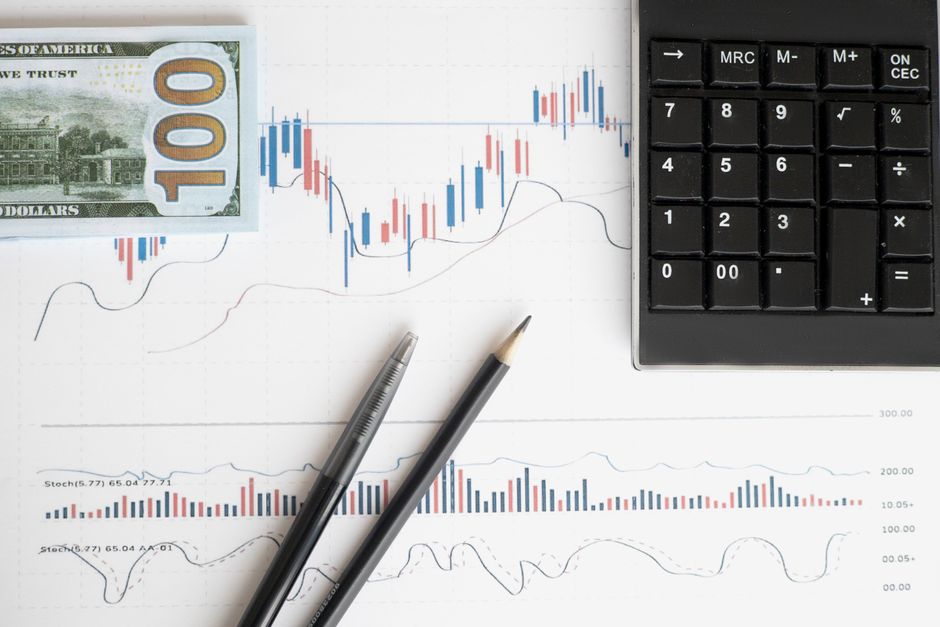
Photo by: Hanna Pad via Pexels
The short answer is forensic data analytics for financial statement fraud detection. While traditional corporate auditing historically relied on retrospective, sample-based testing, the integration of big data analytics allows modern teams to ingest multi-gigabyte datasets and scan 100% of journal entries in real time. Modern enterprises generate massive, unstructured data volumes through e-commerce logs, digital invoices, and global supply chains. Reconciling this data requires advanced machine learning systems that can flag transactional anomalies the moment they occur.
In practice, the standard is clear; the application is not. Many organizations struggle to bridge the gap between their legacy enterprise resource planning (ERP) databases and modern analytics pipelines. To understand how this transition works, we must look at how forensic auditing has shifted from manual paper checks to automated, continuous validation systems.
An auditor on Reddit described a case that illustrates this well: an office manager at a non-profit skimmed approximately $400,000 over several years. The manager had full control over banking, accounts payable, and payroll, and intercepted the physical bank statements, using white-out to erase unauthorized self-payments and inflate balances before scanning them for executive review. Because standard annual audits relied on the scanned statements and did not verify them against online bank records, the scheme persisted.
Reddit r/accounting
This situation highlights the vulnerability of traditional manual auditing. Had the organization deployed automated data analytics, the system would have pulled direct digital bank feeds via secure APIs. Any manual adjustment or mismatch between general ledger records and actual bank transactions would have triggered an automatic alert, stopping the fraud in its first month rather than its fourth year.
Table of contents
- Why Big Data Analytics in Accounting Has Become a Regulatory Necessity
- Forensic Data Analytics: Exposing Financial Statement Misstatement and Fraud
- Continuous Auditing Systems: Moving From Sampling to 100% Population Analysis
- Text Mining and Unstructured Data Ingestion in Corporate Auditing
- The Future of Accounting Analytics: Deep Learning and Network Graphs
- Frequently asked questions
Why Big Data Analytics in Accounting Has Become a Regulatory Necessity

The macroeconomic footprint of technical accounting systems emphasizes a massive structural transition. Financial corporate institutions are heavily investing in algorithmic accounting platforms to mitigate escalating compliance costs and operational risks. According to a 2025 market report by Fortune Business Insights, the global accounting services market was valued at $682.69 Billion in 2025 and is projected to hit $720.86 Billion by 2026.
Geographically, North America leads this transformation. The North American region accounted for 34.60% of global market revenue in 2025, generating $235.83 Billion due to stringent capital market regulations. The United States domestic segment alone is projected to reach $187.58 Billion by December 2026. This regulatory pressure is reinforced by the financial urgency of preventing fraud. The Association of Certified Fraud Examiners (ACFE) highlighted that global corporate fraud losses hit an estimated $5.38 Trillion annually, necessitating enterprise adoption of predictive analytics.
Worth noting is that traditional audit sampling is no longer sufficient under current guidance. When corporate transaction volumes run into millions of ledger entries per quarter, auditing a random selection of 50 transactions is statistically equivalent to searching for a needle in a haystack. Regulators expect public companies to maintain controls that actively monitor their entire data population. This shift is changing the nature of accounting roles, as highlighted in our analysis of are accountants being phased out, where the demand is moving rapidly from manual bookkeeping to analytical oversight.
Forensic Data Analytics: Exposing Financial Statement Misstatement and Fraud

The most prominent example of big data analytics in accounting is forensic data analytics for financial statement fraud detection. Traditional accounting methodologies depended heavily on manual sample verification. In contrast, modern forensic data analytics ingests multi-gigabyte datasets comprising operational invoices, unstructured vendor communications, geographic GPS metadata, and historical payroll logs to identify institutional malfeasance.
Rather than checking isolated balances, accounting software utilizes machine learning models—specifically unsupervised autoencoders and isolation forest algorithms—to identify hidden irregularities. These models establish structural baselines for standard corporate spending. When a transaction deviates from these parameters, the system triggers an immediate alert. An experimental study published in the International Journal of Science and Research Archive (IJSRA) demonstrated that advanced data science techniques such as predictive analytics and anomaly detection models contributed to a 40% increase in fraud detection accuracy compared to manual oversight.
This matters because complex fraud schemes frequently involve multiple minor transactions designed to slip just below the materiality threshold of a standard audit. A human auditor looking at a spreadsheet of 10,000 transactions will not notice a series of $9,000 payments made to a shell vendor registered at a residential address. An isolation forest algorithm, however, will flag the vendor because the payment frequency, timing, and address format deviate from established vendor patterns. The technology acts as an automated filter, highlighting the 1% of transactions that require human professional skepticism.
Continuous Auditing Systems: Moving From Sampling to 100% Population Analysis
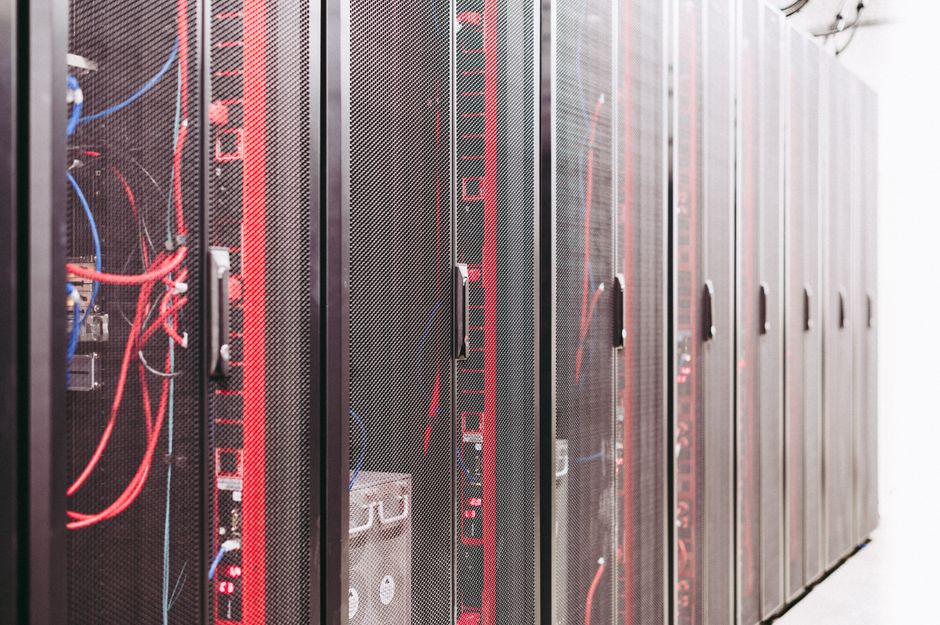
The deployment of big data analytics in accounting fundamentally transforms the daily operations of public accounting networks like Deloitte, PricewaterhouseCoopers (PwC), Ernst & Young (EY), and KPMG. Historically, internal auditors executed retrospective, backward-looking examinations of historical performance every quarter. Continuous auditing tools now connect via secure cloud APIs directly into ERP software architectures, such as SAP SE or Oracle Corporation.
These pipelines screen transactions the moment they occur. A paper published via the Social Science Research Network (SSRN) indicates that AI-driven fraud detection systems improved institutional fraud identification rates by 75%, dramatically lowering long-term capital losses. This shift to cloud-based ERP tools is similar to the transition companies face when moving away from legacy platforms, as discussed in our guide on accounting software like Tally, where cloud-based data feeds provide a major security advantage over local, isolated databases.
However, automation without review is a major risk. Automation that skips the review step is not automation — it’s risk transfer. The liability doesn’t disappear because a machine made the entry. Someone still has to own the output. The firms that understand this build review into the workflow. The firms that don’t are building a future audit finding. This operational reality is why we see major firms shifting their hiring focus toward professionals who can manage these automated systems, a trend highlighted in our coverage of accounting firms using AI 2026.
Text Mining and Unstructured Data Ingestion in Corporate Auditing

Over 80% of corporate data resides in unstructured formats, including contracts, legal briefs, and invoice comment sections. Natural Language Processing (NLP) tools, powered by big data platforms, review thousands of vendor leases simultaneously. They cross-check language patterns against regulatory definitions enforced by the Financial Accounting Standards Board (FASB) in the United States or the International Financial Reporting Standards (IFRS) Foundation in Europe.
For example, during the adoption of the lease accounting standard (ASC 842), companies had to review thousands of service contracts to determine if they contained “embedded leases”—such as a dedicated server in a third-party data center or a specific delivery truck. Doing this manually took months. NLP models can scan 10,000 contracts in minutes, flagging clauses that contain words like “dedicated,” “exclusive,” or “sole use” for human accountant review. This process dramatically reduces implementation timelines while improving compliance accuracy.
This technical integration is why CPA candidates must master data skills. As artificial intelligence proves its capability, the profession is shifting. We documented this transition in our review of whether did AI pass the CPA exam, noting that while the technology can process structured text and calculations with high accuracy, human judgment remains the final line of defense. Accountants must interpret the output of these text-mining models, ensuring that the legal reality of a contract matches the accounting treatment on the balance sheet.
The Future of Accounting Analytics: Deep Learning and Network Graphs

Over the next five years, accounting technologies will move toward hyper-automated, decentralized validation infrastructure. Industry experts project that by 2030, manual data entry will be largely obsolete in enterprise accounting firms. The next stage of development involves combining network graph databases with deep learning architectures. Instead of inspecting singular journal entries, future software will track relational behavioral patterns across separate corporate entities, allowing investigators to trace complex international transaction paths instantly.
A research analysis published in the CPA Journal established that improper revenue recognition and reserves manipulation comprise the majority of financial statement fraud. Chief Financial Officers (CFOs) commit 54% of these violations. Advanced neural networks achieve a 92.4% validation accuracy rate, providing a reliable line of defense against high-level executive override. CFOs are responsible for over half of these statement frauds. It turns out the call is frequently coming from inside the house.
Ultimately, these future systems will not replace human professionals, but they will redefine the role of the auditor. As automated systems handle the routine work of validation and transaction matching, the focus of the accounting profession will shift entirely toward risk assessment, exception handling, and strategic compliance. This evolution is discussed in our detailed guide on will AI replace accountants, showing that while the administrative tasks of accounting are disappearing, the strategic demand for analytical professionals has never been higher.
Frequently asked questions
Still Stuck? Let’s Connect

The standard-setting timelines are a systemic problem, and implementation is rarely smooth. Navigating the transition to automated auditing and compliance frameworks requires deep technical knowledge and a clear understanding of the tools available. The technology will keep changing. The need to reconcile it against reality won’t. That’s either reassuring or exhausting, depending on your relationship with Excel.
About the Author