
Photo by: Mikhail Nilov via Pexels
TL;DR: The SNHU accounting certificate is an 18-credit, 6-course online undergraduate micro-credential priced at $354 per credit ($6,372 total base tuition). Delivered asynchronously in 8-week terms, it covers financial, managerial, intermediate, tax, and advanced accounting. Designed for career changers and professionals needing accounting hours, it prepares graduates for clerk, bookkeeping, and junior analyst roles earning a median of $47,440 (BLS). While it does not satisfy the 150-credit CPA exam threshold on its own, all 18 credits stack directly into SNHU’s Bachelor of Science in Accounting.
Navigating career shifts or educational upgrades in corporate finance often presents a stark dilemma: commit three to four years to a full degree or find a targeted pathway that delivers immediate technical competency. The SNHU accounting certificate occupies a specific niche in higher education—providing core accounting coursework without forcing adult learners to repeat general education requirements. Whether you hold a bachelor’s degree in another field and need upper-level accounting credits or want to qualify for entry-level finance roles, understanding the program’s exact costs, curriculum structure, and real-world career outcomes is essential before enrolling.
- What Is the SNHU Accounting Certificate?
- SNHU Accounting Certificate Cost and Financial Aid Options
- Required Courses and Curriculum Breakdown
- Admission Requirements and Credit Transfer Rules
- Career Value and Job Market Outcomes
- Certificate vs. Degree: Comparing Educational and Career Outcomes
- Frequently Asked Questions
What Is the SNHU Accounting Certificate?

The Southern New Hampshire University (SNHU) undergraduate accounting certificate is a 6-course, 18-credit post-secondary credential delivered entirely online through the Brightspace learning management system. Unlike general business administration certificates that touch lightly on multiple corporate functions, this program focuses strictly on core financial accounting mechanics, taxation laws, and advanced reporting frameworks.
Courses are structured in accelerated 8-week terms, running six terms per calendar year. Students taking one course per term complete the entire credential in roughly 12 months, while those taking two courses per term can finish in as few as 6 to 8 months. The curriculum relies heavily on integrated software platforms including Cengage MindTap and Microsoft Excel, requiring students to complete practical ledger entries, trial balances, and financial statement reconciliations rather than relying solely on multiple-choice quizzes.
For adult professionals seeking to build technical literacy, this micro-credential functions as an academic bridge. It provides non-accounting college graduates with the foundational coursework necessary to evaluate corporate ledgers or pursue self-taught accounting skills alongside formal credentials.
SNHU Accounting Certificate Cost and Financial Aid Options

Understanding the full financial commitment requires looking beyond base tuition rates to evaluate course materials and financial aid eligibility. As of the 2025–2026 academic year, SNHU maintains a uniform tuition rate for online undergraduate coursework:
| Fee Component | Cost per Unit | Total Program Estimate (18 Credits) |
|---|---|---|
| Online Undergraduate Tuition | $354 per credit | $6,372 |
| U.S. Military / Eligible Spouse Tuition | $231 per credit | $4,158 |
| Digital Course Materials / Software Fees | ~$50–$125 per course | $300–$750 |
| Application Fee | $0 | $0 |
| Graduation / Certificate Fee | $0 | $0 |
Total base tuition for the standalone certificate stands at $6,372. When accounting for digital textbook access codes—which grant access to Cengage and WileyPLUS interactive problem sets—the total out-of-pocket expense ranges between $6,672 and $7,122.
Because SNHU is an accredited institution, certificate students enrolled at least half-time (6 credits per semester, equivalent to one 3-credit course per 8-week term over consecutive terms) may qualify for federal financial aid, including Federal Direct Subsidized and Unsubsidized Loans and Pell Grants. Employer tuition reimbursement programs also frequently cover this certificate due to its direct application to corporate bookkeeping and accounts payable operations. When searching for the cheapest accounting degree online pathways, evaluating certificate credit cost per hour offers a benchmark against full degree costs.
Required Courses and Curriculum Breakdown
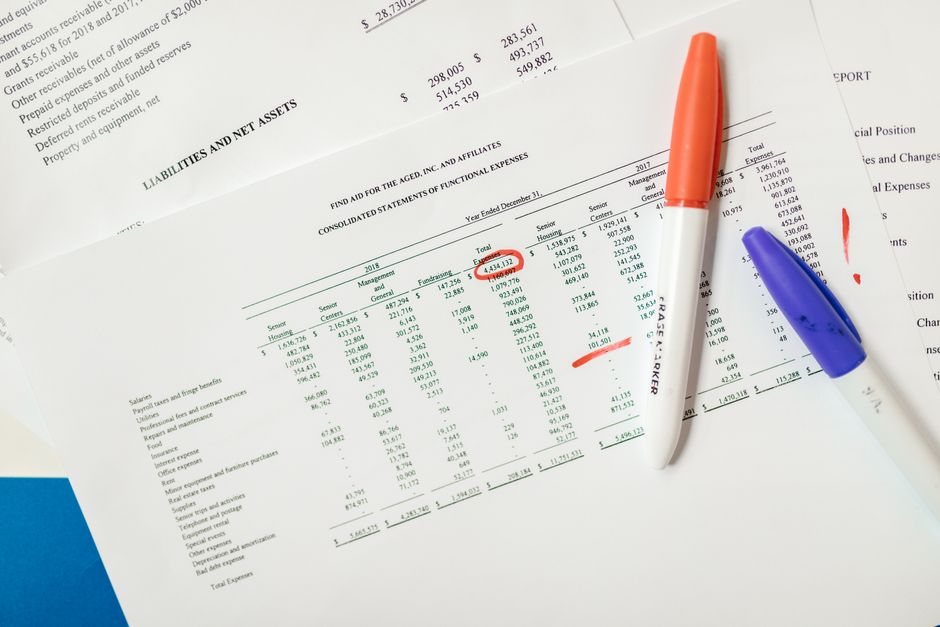
The 18-credit curriculum comprises six distinct 3-credit courses. Unlike certificate programs that substitute high-level introductory survey classes for rigour, SNHU requires students to complete the exact core sequence taken by Bachelor of Science degree candidates:
- ACC-201: Financial Accounting — Introduces double-entry bookkeeping, debit and credit rules, journal entries, general ledger posting, and financial statement preparation (Balance Sheet, Income Statement, Cash Flow Statement).
- ACC-202: Managerial Accounting — Covers internal cost accounting, cost-volume-profit (CVP) analysis, job-order costing, budgeting, variance analysis, and operational decision-making for management.
- ACC-329: Intermediate Accounting I — Examines US GAAP conceptual frameworks, asset valuation, revenue recognition under ASC 606, time-value-of-money concepts, and inventory accounting (LIFO, FIFO, average cost).
- ACC-330: Intermediate Accounting II — Continues upper-level reporting, focusing on long-term liabilities, stockholder equity, dilutive securities, earnings per share (EPS) calculations, and lease accounting under ASC 842.
- ACC-307: Federal Taxation — Teaches the principles of the Internal Revenue Code (IRC), focusing on individual income tax returns, gross income inclusions/exclusions, deductions, property transactions, and corporate tax foundations.
- ACC-405: Advanced Accounting — Addresses complex financial reporting, business combinations, consolidation accounting for parent-subsidiary entities, foreign currency transactions, and partnership accounting.
The inclusion of ACC-329, ACC-330, and ACC-405 is critical. Many community college certificates cap instruction at the 200-level (introductory financial and managerial accounting). By pushing candidates through 300-level and 400-level topics, SNHU equips students with actual financial reporting competencies required for corporate staff roles.
Admission Requirements and Credit Transfer Rules

Admission to the SNHU accounting certificate program follows open-enrollment standards, designed to remove traditional barriers for working adults. Applicants are not required to submit SAT, ACT, or GMAT scores, nor is a minimum college GPA mandated for entry.
Standard Admission Checklist:
- Completed online application.
- Proof of high school graduation or official GED equivalent.
- Official high school or previous college transcripts (SNHU offers transcript request services on behalf of applicants).
- English language proficiency scores (TOEFL or IELTS) for international applicants whose primary language is not English.
Transfer Credit Policy: SNHU allows students to transfer up to 9 credits (50% of the certificate) from prior accredited post-secondary institutions, provided the courses earned a grade of “C-” or better and align directly with the required curriculum. Furthermore, every credit earned within the certificate is 100% stackable. If a graduate subsequently decides to pursue an Associate of Science or Bachelor of Science in Accounting at SNHU, all 18 credits transfer directly toward degree requirements without credit loss.
Career Value and Job Market Outcomes

Evaluating the career value of an 18-credit certificate requires realistic expectations regarding employer requirements in corporate accounting.
For professionals without a prior degree, the certificate qualifies holders for foundational operational roles in corporate finance departments. Typical job titles include Bookkeeper, Accounts Payable (AP) Specialist, Accounts Receivable (AR) Clerk, Payroll Specialist, and Accounting Assistant. According to data published by the U.S. Bureau of Labor Statistics (BLS), the median annual wage for bookkeeping, accounting, and auditing clerks was $47,440, with top earners in corporate headquarters exceeding $67,000.
A career changer on Reddit described completing SNHU accounting coursework while working full-time in logistics: the 8-week course structure and Cengage practice sets allowed them to master journal entries and secure a staff bookkeeping role within ten months of enrolling.
Reddit r/SNHU
For professionals who already hold a bachelor’s degree in another field (such as history, communications, or business administration), the certificate carries a different form of value. In public accounting and corporate finance, non-accounting graduates often hit a promotion ceiling because they lack formal accounting hours. Completing an 18-credit post-baccalaureate certificate satisfies corporate prerequisites for staff accountant positions and provides the upper-level accounting credits required by state boards of accountancy to sit for the Uniform CPA Examination.
Certificate vs. Degree: Comparing Educational and Career Outcomes

To determine whether an 18-credit certificate aligns with your long-term goals, compare its core metrics directly against a traditional 120-credit Bachelor of Science in Accounting:
| Metric | SNHU Accounting Certificate | SNHU B.S. in Accounting |
|---|---|---|
| Total Credit Hours | 18 Credits | 120 Credits |
| Average Completion Time | 6 to 12 Months | 3.5 to 4 Years |
| Base Online Tuition | $6,372 | $42,480 |
| Primary Target Roles | Bookkeeper, AP/AR Clerk, Junior Analyst | Staff Accountant, Auditor, Tax Associate |
| Median Starting Salary Range | $40,000 – $52,000 | $65,000 – $78,000 |
| CPA Exam Eligibility Standalone | No (Requires 150 total credit hours) | Partial (Requires 30 additional credits) |
| Best For | Career changers & non-accounting degree holders | First-time college students & aspiring CPAs |
The table highlights a crucial industry distinction: your accountant is not your CFO, and a standalone certificate is not a full degree substitute. The talent pipeline problem in accounting is real, and the profession is actively debating entry barriers. While the National Association of State Boards of Accountancy (NASBA) mandates 150 semester hours for full CPA licensure, spending $42,480 on a second bachelor’s degree is often financially redundant for someone who already holds a college degree. For non-accounting degree holders, taking an 18-credit certificate offers a surgical strike to acquire required accounting coursework without incurring unnecessary tuition debt.
However, if you do not hold a prior college degree and expect an 18-credit certificate to land senior auditor roles or lead directly to a CPA license, you will hit a regulatory wall. Reviewing career paths for accountants without a CPA or mapping out your long-term accounting career progression ensures your credential selection matches your professional goals.
Frequently Asked Questions
An 18-credit micro-credential will not automatically land a partner office or sign audit opinions. It will, however, give you practical general ledger skills, clean up your financial reporting, and qualify you for essential corporate finance roles. For $6,372, that is a fair transaction. Back to top ↑
About the Author