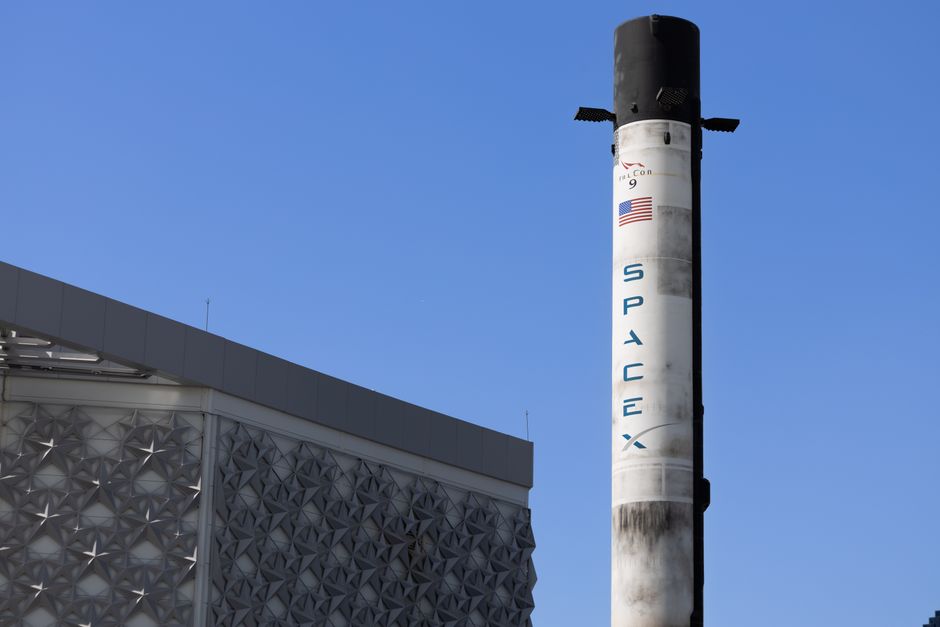
Photo by: iCliff Agendia via Pexels
TL;DR: SpaceX stock (SPCX) declined two days after its historic June 12, 2026 Nasdaq IPO due to the sudden announcement of a $60 billion all-stock acquisition of Cursor (Anysphere), which caused immediate share dilution. Other contributing factors included extreme valuation multiples relative to Nvidia, high net losses ($4.94 billion in 2025) disclosed in its SEC Form S-1, and the introduction of option contracts that enabled short selling. For long-term investors, holding shares provides exposure to an aerospace monopoly, though short-term volatility remains high.
The historic initial public offering (IPO) of Space Exploration Technologies Corp. on June 12, 2026, completely rewrote the rules of Wall Street. Listing on the Nasdaq exchange under the ticker symbol SPCX, the company set its final offering price at $135.00 per share, valuing the aerospace and artificial intelligence giant at a staggering $1.77 trillion right out of the gate.
Driven by unprecedented retail investing demand via platforms like Robinhood and Fidelity, the stock surged over 55% in its first three days of trading, reaching an intraday peak of $225.64 by Tuesday, June 16, 2026. However, momentum quickly shifted. SpaceX stock declined two days after IPO peaks, experiencing consecutive daily drops on Wednesday, June 17, and Thursday, June 18, 2026. The stock hit an intraday low of $172.11 before recovering to settle at $185.00 as markets closed for the week. This sudden reversal wiped out roughly $600 billion in market capitalization from its peak. Understanding the exact catalysts behind this correction is vital for deciding whether to hold or liquidate your shares.
Table of contents
- Why SpaceX Stock Declined Two Days After IPO
- The $60 Billion Anysphere (Cursor) Acquisition and Equity Dilution
- Extreme Valuation Friction and Multiples vs. Nvidia
- The Sudden Introduction of Derivatives and Option Trading
- Should You Hold SpaceX Stock (SPCX) Long Term?
- Technical Outlook: The 180-Day Share Unlock Roadmap
- Frequently asked questions
Why SpaceX Stock Declined Two Days After IPO
The short answer is a combination of immediate share dilution, extreme valuation friction, and structural shifts in market mechanics. The primary catalyst was the unexpected announcement on June 16 of a $60 billion all-stock acquisition of Anysphere, the startup behind the Cursor AI coding platform. This transaction diluted existing shareholders by approximately 3.4% before the ink on the IPO prospectus had even dried.
This capital action was compounded by fundamental valuation concerns. At its peak price, SPCX traded at 67 times its trailing sales, a multiple that forced analysts to scrutinize the company’s GAAP financial metrics. Under current guidance, the company remains highly unprofitable at the net level, reporting a net loss of $4.94 billion for 2025. Finally, the launch of standardized options trading on June 16 allowed institutional short-sellers to bet against the stock’s momentum, removing the supply squeeze that drove the initial market pop.
The $60 Billion Anysphere (Cursor) Acquisition and Equity Dilution

The primary catalyst for the mid-week selloff occurred on Tuesday, June 16, 2026, when SpaceX Chief Executive Officer Elon Musk announced that the newly public company would acquire Anysphere, the startup behind Cursor. Cursor is the leading AI-powered developer environment, which has gained massive traction in AI in operational accounting workflows and software development. The $60 billion deal is structured entirely as an all-stock transaction. In practice, this means SpaceX is using its newly minted public equity as currency, issuing new shares to Anysphere’s founders and backers rather than deploying cash.
According to a report published by Forbes on June 18, 2026, this massive equity issuance represents an instantaneous 3.4% dilution for investors who bought shares at the $135.00 IPO price. Worth noting is how quickly institutional analysts updated their models. Morningstar analysts Nicholas Owens and Suryansh Sharma immediately lowered their fair value estimate for SPCX from $63 to $62 per share, explicitly citing the sizable dilution from the Cursor acquisition. This corporate move also relates to discussions surrounding AI passing the CPA exam and the broader integration of artificial intelligence tools across modern business infrastructure.
A retail investor on Reddit expressed frustration that the SpaceX IPO felt like “exit liquidity” for early-stage venture capital and insiders, especially with the immediate $60 billion Anysphere acquisition adding to the share dilution before the first week of public trading had even closed.
Reddit r/stocks
The timing of the deal spooked institutional money managers. While tech bulls praised the acquisition as a long-term play to control the fundamental developer layer of the AI ecosystem, value-driven investors viewed it as an aggressive, dilutive maneuver. (This is the part where the slide deck usually says “frictionless software engineering”. It was not frictionless for existing share values.)
Extreme Valuation Friction and Multiples vs. Nvidia
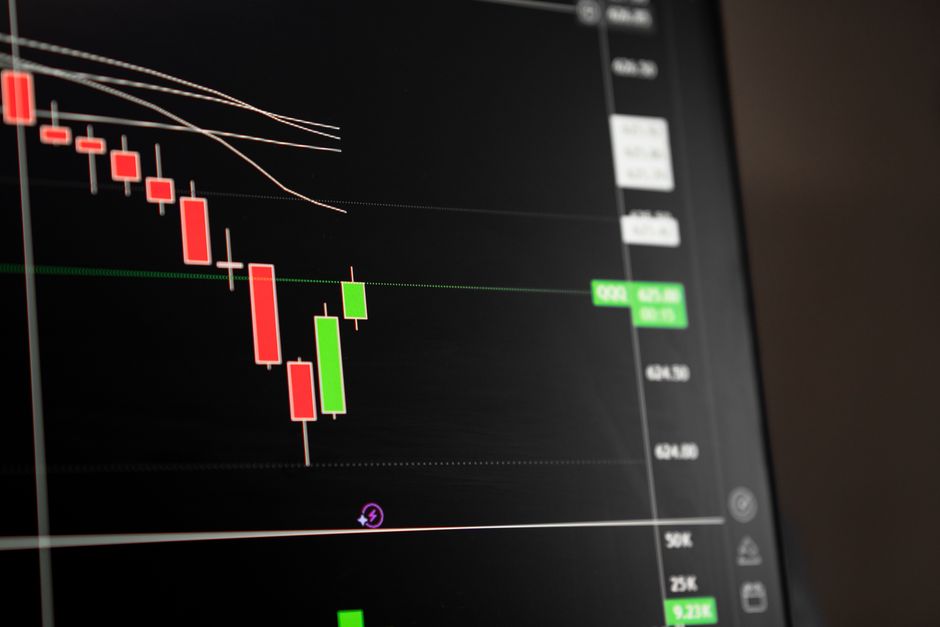
At its peak valuation near $3 trillion, SpaceX began trading at multiples that many fundamental analysts viewed as unsustainable. According to an AJ Bell market analysis led by financial analyst Dan Coatsworth on June 18, 2026, the company’s peak market price forced SpaceX to trade at roughly 67 times its trailing sales. To put this in perspective, Coatsworth pointed out that this multiple is approximately three times higher than the price-to-sales multiple of Nvidia Corporation (NVDA), which was already considered highly valued by historic market standards.
Friction increased as investors began digging into the hard numbers within SpaceX’s Form S-1 filed with the U.S. Securities and Exchange Commission (SEC). The financial disclosures revealed that while revenue grew 33% year-over-year to hit $18.67 billion in full-year 2025, the business remains deeply unprofitable at the net level. SpaceX posted a staggering net loss of $4.94 billion for 2025, followed by an additional net loss of $4.28 billion in the first quarter of 2026 alone. Furthermore, historical valuation expert and New York University finance professor Aswath Damodaran published an independent open-source evaluation of SPCX on June 19, 2026, on his website NYU Stern. He concluded that a realistic, math-driven valuation for the company sits closer to $98.00 per share. This public report added immense psychological downward pressure, triggering rapid institutional profit-taking.
SpaceX’s Form S-1 disclosed a Q1 2026 net loss of $4.28 billion. For context, that is roughly $47 million in losses per day. If your accounting team is struggling with a $400 expense report variance, it is helpful to keep this sense of scale in mind. This matters because it highlights the divergence between non-GAAP metrics and GAAP realities. Non-GAAP metrics are useful until they are used to obscure GAAP performance. SpaceX’s massive net losses are a stark reminder that while adjusted EBITDA figures and Starlink’s operating cash flow look attractive, GAAP net losses tell the true story of capital burn. As we noted in our earlier analysis of SpaceX’s IPO filing, the capital expenditure required to fund the Starship launch infrastructure and global satellite constellations is unprecedented.
The Sudden Introduction of Derivatives and Option Trading

When SpaceX debuted on Friday, June 12, 2026, it suffered from a severe lack of tradable public float. Only 4.9% of the company’s total shares outstanding were initially available to the public. This acute scarcity of supply, clashing with overwhelming retail demand, created an artificial upward price squeeze. However, the structural supply-demand dynamic changed dramatically on Tuesday, June 16, 2026. On that morning, major clearinghouses officially authorized the launch of standardized options and derivative contracts for SPCX.
The introduction of options fundamentally altered the market structure in two ways:
- The Ability to Short: Institutional hedge funds and retail skeptics gained the ability to buy put options and establish short positions, directly betting against the stock’s upward trajectory for the first time.
- Heightened Volatility Expectations: Susquehanna derivatives strategist Chris Murphy issued a technical note stating that option market pricing implied a 15% mathematical probability that SpaceX stock could lose up to half of its total value over the subsequent 90 days due to volatile hedging dynamics.
Hedge funds wasted no time. The options market opened on Tuesday, and by Wednesday, short-sellers were using put options to express their deep-seated concerns about orbital mechanics. The sudden availability of derivatives removed the “long-only” constraint that had kept the share price artificially elevated during the first two days of trading.
Should You Hold SpaceX Stock (SPCX) Long Term?

Deciding whether to hold your SPCX position depends entirely on your risk tolerance, your investment timeframe, and your thesis on the global artificial intelligence and space economies. Below is a direct comparison of the holding thesis versus the selling risks based on recent market developments.
| Holding Thesis (The Bull Case) | Liquidating Risks (The Bear Case) |
|---|---|
| Monopolistic Moat: Complete domination of the global launch sector via reusable Falcon 9 and Starship platforms. | Near-Term Dilution: High likelihood of further all-stock acquisitions using SPCX as a currency. |
| Starlink Cash Generation: High-margin satellite internet growth tracking toward a massive total addressable market. | Heavy Capital Expenditures: Continual cash burn on data centers and launch infrastructure. |
| AI Stack Integration: Owning both the physical orbital constellation and AI developer tools like Cursor. | Lock-up Expirations: Staggered share unlocks starting 70 days post-IPO, introducing market supply. |
Technical Outlook: The 180-Day Share Unlock Roadmap

If you decide to hold SpaceX stock, you must prepare for significant technical volatility over the next six months. Because the starting public float is exceptionally low, future price movements will be highly sensitive to scheduled insider share unlocks. According to the official prospectus details compiled by The Motley Fool on June 17, 2026, SpaceX is utilizing a highly unique, staggered approach to corporate lock-up expirations:
- Post-Q2 Earnings Unlock (Late July / Early August 2026): Company insiders will be legally eligible to sell 20% of their total shares on the second full trading day after the Q2 2026 earnings release.
- The +30% Price Trigger Condition: If SPCX maintains a sustained trading price above $175.50 (which is exactly 30% above the $135.00 IPO price), eligible insiders are granted the right to unlock and liquidate an additional 10% of their holdings.
- The 180-Day Full Float Milestone (December 9, 2026): All remaining internal insider shares, including major early-stage venture capital blocks, will see their lock-up provisions expire completely. This date will finally allow 100% market liquidity.
Counterbalancing this upcoming wave of insider supply is a series of forced index inclusions. Financial expert Jacob Friedman of Focused Wealth Management confirmed that while the S&P 500 cannot add SpaceX until at least June 2027 due to profitability rules, the stock will be systematically added to the Nasdaq-100 on July 6, 2026. This index inclusion will force passive ETFs and mutual funds to acquire billions of dollars worth of SPCX shares, providing an automated demand floor.
Frequently asked questions

The market will keep debating the valuation. Your brokerage account will reflect it. Start there.
About the Author