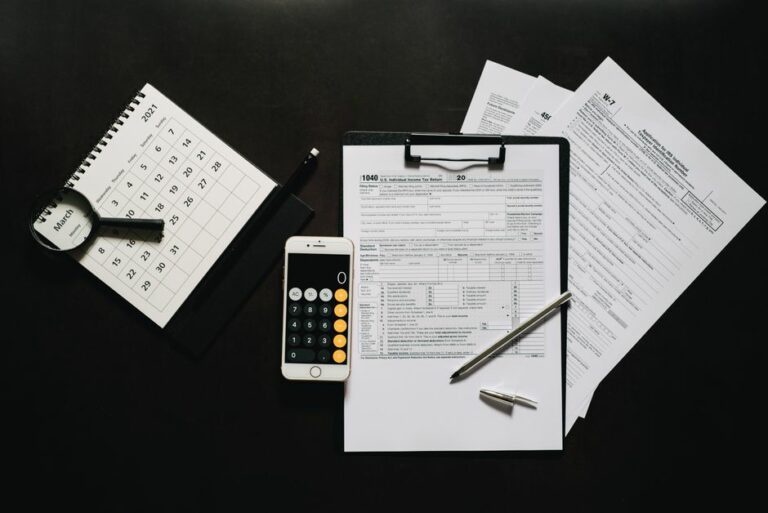
Photo by: George Pak via Pexels
TL;DR: Securing a lower student loan interest rate in the US requires a dual approach depending on your debt type. For federal student loans, enrolling in auto-pay provides an immediate 0.25% discount, and certain borrowers may qualify for temporary federal rate cuts. For private student loans, refinancing with a commercial lender is the primary route to secure a lower student loan interest rate, though it requires a strong credit score or a creditworthy cosigner.
Managing educational debt is a significant financial burden, prompting many borrowers to ask how they can secure a lower student loan interest rate. The interest rate on your loan determines how much extra you pay over the lifetime of your debt and directly impacts your monthly cash flow. Navigating the modern lending landscape in the US requires understanding the critical structural differences between federal and private student debt networks, as well as the dynamic regulatory changes shaping the market in 2026. Securing a rate reduction can save you thousands of dollars, but the path you take depends entirely on who holds your promissory note.
- Lower Student Loan Interest Rate Instantly with Autopay
- Track the Temporary 2026 Federal Student Loan Rate Relief
- Refinance Private Student Debt for a Lower Base Rate
- Weigh the Loss of Federal Safety Nets Against Private Rate Savings
- Reduce Lifetime Interest Costs Using Bi-Weekly Payments
- Add a Creditworthy Cosigner to Qualify for Prime Market Rates
Lower Student Loan Interest Rate Instantly with Autopay

The fastest and most accessible method to secure a lower student loan interest rate is to enroll in automatic payments. The U.S. Department of Education offers a standard 0.25% interest rate reduction for any borrower who signs up for auto-pay through their designated federal loan servicer, such as MOHELA or Nelnet. This auto-pay incentive is not a promotion; it is a permanent feature of the Direct Loan program designed to reduce default rates. A 0.25% autopay discount will not buy you a house, but it does mean Nelnet gets to withdraw money from your account before you can spend it on coffee.
This interest rate discount applies directly to your existing principal balance and immediately reduces the daily interest accumulation. Because student loans use a simple daily interest formula, even a minor rate adjustment changes the trajectory of your amortization schedule. The majority of private student loan options also offer this identical 0.25% auto-pay discount. Signing up takes less than ten minutes through your servicer’s online portal, making it the highest-ROI, lowest-risk action any borrower can take.
Track the Temporary 2026 Federal Student Loan Rate Relief
For federal borrowers, administrative policies can introduce temporary windows of rate relief. In early 2026, the Executive Branch announced a temporary policy directive dropping interest rates on select federal student loans by 1.00% starting July 1, 2026, and running through June 30, 2028. This measure is intended to ease the transition back into full repayment for borrowers who have struggled with fluctuating economic conditions. (The federal student loan system has been described as a public service, though anyone who has spent three hours on hold with MOHELA might choose a different word.)
To qualify for this 1.00% temporary rate cut, borrowers must satisfy specific criteria: their loans must be Direct Loans held by the Department of Education, they must be actively enrolled in an electronic payment plan, and their accounts must be in good standing. This policy does not require a separate application; the servicer applies the reduction automatically to eligible accounts. Keeping your federal account active and avoiding default is critical to ensuring you capture this temporary interest discount over its two-year cycle.
Refinance Private Student Debt for a Lower Base Rate

For those holding private debt, or federal borrowers who have decided to move outside the government network, private student loan refinancing is the primary mechanism to secure a lower rate. Refinancing occurs when a commercial financial institution pays off your existing high-interest loans and issues you a completely new loan under fresh terms. Lenders evaluate your creditworthiness, annual income, and debt-to-income (DTI) ratio to determine your new rate. Private student loan companies advertise their starting rates with the same enthusiasm as luxury car dealerships, reserving their best 3.99% APR offers for borrowers who probably don’t need to borrow money in the first place.
The refinancing flow is straightforward but structurally rigid. It moves your debt from the current provider to a new private contract:
[Current High-Interest Loans] ──> Paid off by Private Lender ──> [New Single Loan with Lower Rate]
Private lenders like SoFi and Citizens Bank offer both fixed and variable interest rate products. When you shop for a refinancing loan, you must decide whether to lock in a fixed rate or opt for a variable rate. A variable rate may start lower but carries the risk of rising if macroeconomic benchmarks shift. The table below outlines the core differences between these refinancing options in the current market:
| Refinancing Option | Typical Starting Rate Range (2026) | Key Benefit | Key Risk |
|---|---|---|---|
| Fixed Rate | 3.99% – 8.49% APR | Guaranteed stable monthly payments | Rates are locked even if market yields drop |
| Variable Rate | 3.49% – 9.99% APR | Lower initial rate and monthly cost | Monthly payments increase if benchmark interest rates rise |
Weigh the Loss of Federal Safety Nets Against Private Rate Savings

Refinancing federal debt into a private contract is not a simple rate optimization; it is a permanent swap of an emergency insurance policy for a slightly lower interest rate. Once you execute a private refinancing contract, your federal student loans are paid off, and you can never return to the federal system. You permanently forfeit critical consumer protections granted under the Higher Education Act of 1965, which could protect your finances during personal economic crises.
Federal benefits that are permanently lost during private refinancing include:
- Income-Driven Repayment (IDR) Plans: Programs like SAVE or IBR that tie your monthly payment directly to a percentage of your discretionary income, potentially dropping your payment to $0 if you experience job loss or low earnings.
- Public Service Loan Forgiveness (PSLF): The program that cancels the remaining balance on your federal loans after 10 years of public service employment and 120 qualifying monthly payments.
- Administrative Forbearance: Hardship deferments and emergency payment pauses enacted during national crises or transitions.
Private lenders are commercial businesses. They do not offer payment formulas based on your income, and they are under no obligation to forgive your debt if you work in public service. The real-world stakes of this distinction are clear. A private student loan borrower on Reddit shared their experience navigating this rigid landscape:
A private student loan borrower described paying their loan on time for years, only to be repeatedly denied solo refinancing by Sallie Mae because their debt-to-income ratio was still too high without a cosigner. They had to shop around multiple private lenders for soft-pull pre-qualifications before finding one willing to release their original cosigner and drop their rate from a double-digit 12.75%.
Reddit r/StudentLoans
If you hold private debt, refinancing is a low-risk option because you already operate without federal protections. However, if your debt is federal, refinancing to save a percentage point on your interest rate means trading a structural safety net for a marginal yield discount. Weigh this choice carefully before signing a private promissory note.
Reduce Lifetime Interest Costs Using Bi-Weekly Payments

Achieving a lower interest burden does not solely rely on modifying your nominal rate. You can change how interest compounds by adjusting your physical payment schedule. Most student loans accrue interest daily based on your outstanding principal balance, using a simple daily interest formula. Because your interest is calculated by multiplying your principal by your daily rate, reducing your principal faster lowers the amount of interest charged each day.
By moving from a standard monthly payment schedule to a bi-weekly payment schedule (paying half your monthly bill every 14 days), you will make 26 half-payments in a year. This results in 13 full payments over 12 months, accelerating your principal reduction. This extra payment chips away at the baseline principal amount, preventing thousands of dollars in daily interest from accumulating over the life of your loan. If you find yourself wondering whether you should buy stocks now or wait (Should You Buy Stocks Now or Wait?), understand that guaranteed interest savings from early debt reduction are a reliable alternative to equity market volatility.
Furthermore, accelerating your principal payoff frees up capital that can be redirected toward long-term savings. The money saved on interest can be funneled into Roth IRA alternatives (Roth IRA Alternatives) to build tax-free wealth for retirement. When the macroeconomic environment shifts under new central bank policies—such as those following Fed Chair Kevin Warsh’s confirmation (Kevin Warsh Sworn In)—paying off fixed-rate debt acts as a hedge against changing market yields. Shifting your payment frequency is a self-directed strategy that works independently of lender approvals.
Add a Creditworthy Cosigner to Qualify for Prime Market Rates

If you decide to refinance private loans but lack a seasoned credit history, your individual financial profile may prevent you from qualifying for top-tier rates. Private student loan options depend heavily on risk-based pricing. Lenders protect their capital by charging higher rates to borrowers who have shorter work histories or carry a high debt load. Adding a creditworthy cosigner—such as a parent, spouse, or relative with a FICO score above 750—can lower the risk premium assessed by the lender.
According to data tracked by The College Investor in their June 2026 Lending Review, adding a highly qualified cosigner can decrease private loan interest offers by 0.50% to 1.50% compared to applying as an individual borrower. (The Higher Education Act of 1965 is 150 pages of dense legal prose, which is still shorter than the average customer agreement for a private consolidation loan.) This interest reduction directly lowers your monthly payment and saves significant capital over the loan term. Many private lenders offer a cosigner release program, allowing you to remove the cosigner from the loan contract after you make 24 to 36 consecutive on-time monthly payments and meet credit criteria independently.
Frequently asked questions
Conclusion
Securing a lower student loan interest rate in the US requires a strategic combination of automated account discounts, active monitoring of federal relief policies, and calculating private refinancing options. If you possess federal debt, immediately capitalizing on the 0.25% auto-pay discount and monitoring the upcoming 2026 federal rate reductions is the lowest-risk path forward. For high-interest private debt, obtaining new loan terms through competitive refinancing with top-tier financial institutions remains the most definitive mechanism to slash your interest accumulation. A lower interest rate will save you money. Shorter terms and extra payments will save you more. Your spreadsheet is ready when you are.
About the Author