Photo by: Pixabay via Pexels
The short answer is that the accounting cycle steps comprise an eight-step chronological workflow designed to identify, record, and verify financial transactions from the moment they occur to the closing of the books at the end of an accounting period. By systematically moving from data capture to financial statement generation, this structured sequence ensures regulatory compliance, guides internal controls, and provides an audit-ready ledger for corporate stakeholders. Understanding the precise sequence of these steps is the difference between a clean audit opinion and a chaotic scramble during the month-end close.
To navigate this workflow effectively, here is the complete breakdown of the eight essential accounting cycle steps, their quantitative impact, and the modern software integrations that support them.
- Why the Accounting Cycle Steps Matter for Business Compliance
- Step 1: Identify and Analyze Financial Transactions
- Step 2: Record Transactions in the Journal
- Step 3: Post Journal Entries to the General Ledger
- Step 4: Prepare the Unadjusted Trial Balance
- Step 5: Record Adjusting Journal Entries
- Step 6: Prepare the Adjusted Trial Balance
- Step 7: Generate Financial Statements
- Step 8: Close the Books (Closing Entries)
- The Automation Shift: RPA and Cloud ERP Reconciliation
Why the Accounting Cycle Steps Matter for Business Compliance
For any operating business, financial reporting is not merely an administrative exercise. It represents the formal translation of daily commerce into structured, verifiable disclosures. Implementing the correct accounting cycle steps ensures that every credit card swipe, vendor invoice, and payroll run is mapped accurately to its final destination on the balance sheet or income statement. This systematic workflow is not just a bookkeeping requirement; it represents the operational framework that underscores the importance of accounting in business, protecting the entity from reporting irregularities and audit findings.
Without a rigorous adherence to these sequential stages, transactions are easily double-counted, reconciliations stretch into weeks, and year-end audits become highly stressful, expensive projects. In multi-state or global organizations, maintaining a standardized cycle is the only defense against regulatory non-compliance and tax reporting discrepancies.
Step 1: Identify and Analyze Financial Transactions
The cycle begins the moment an economic event occurs. Accountants must isolate and analyze transactions that impact the company’s financial position. This involves gathering source documents such as invoices, bank statements, purchase orders, and sales receipts. Every transaction must be verified before it is entered into the system to confirm it represents a legitimate business expense or revenue event.

In practice, large enterprises deal with a massive volume of transactions. For example, under the leadership of CEO Tim Cook, Apple Inc. processes millions of point-of-sale transactions daily across its global retail network. Processing this data manually would be impossible. Thus, businesses rely on automated point-of-sale (POS) and inventory systems to capture transaction data instantly, initiating the cycle without human intervention.
Step 2: Record Transactions in the Journal
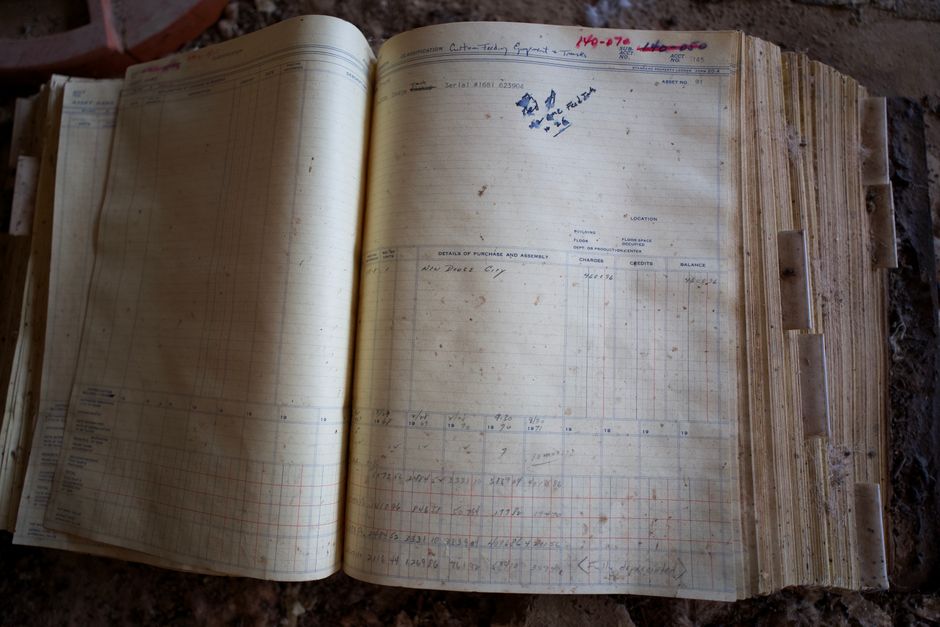
Once analyzed, the transaction is chronologically recorded. Understanding where accounting transactions are first recorded is vital for maintaining a clean audit trail. In a double-entry bookkeeping system, every transaction must impact at least two accounts with equal debits and credits. This double-entry bookkeeping system traces its history directly to Luca Pacioli, the father of accounting, who formalized the balance of debit and credit lines in 1494.
For example, if a firm buys $15,000 of office equipment on credit, the Equipment asset account is debited $15,000, and the Accounts Payable liability account is credited $15,000. Recording these entries chronologically in the general journal ensures that no transaction is omitted and that both sides of the accounting equation remain in perfect balance.
Step 3: Post Journal Entries to the General Ledger
Journal entries are transferred to the general ledger, which aggregates all financial activity by specific accounts (e.g., Cash, Inventory, Revenue). Ledger classification provides a centralized view of account balances rather than just a chronological list of events. This helps management monitor specific category balances, such as total cash on hand or accounts payable liability, at any given moment.

In practice, modern software suites automate ledger postings directly. However, deploying automation without human review is a risk transfer, not true efficiency. As we often observe in multi-system ERPs, automation that skips the review step is not automation — it’s risk transfer. The financial liability doesn’t disappear because a machine made the entry; someone must still own the output. Cloud platforms like Oracle NetSuite and SAP SE, headquartered in Walldorf, Germany, automate ledger postings in real-time but still require controllers to verify interface logs to prevent mapping discrepancies.
Step 4: Prepare the Unadjusted Trial Balance
At the close of the accounting period, accountants calculate the total balances of all ledger accounts to create an unadjusted trial balance. The primary purpose is to verify that total debits equal total credits. If a discrepancy arises, it signals a recording or posting error that must be rectified before proceeding further in the closing cycle.
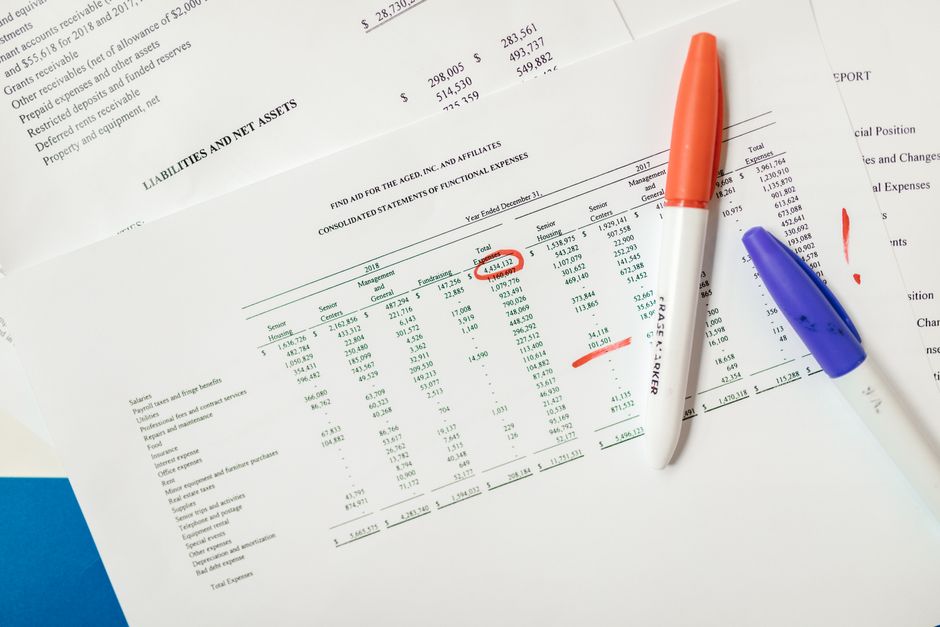
It is worth noting that while a balanced trial balance proves mathematical equality, it does not guarantee the absence of errors. For example, if a transaction was entirely omitted, or if a debit was posted to the wrong asset account, the trial balance would still balance. This limitation is why the subsequent analysis steps are crucial.
Step 5: Record Adjusting Journal Entries
To satisfy the accrual basis of accounting, professionals must record adjusting journal entries. Under the guidelines established by the Financial Accounting Standards Board (FASB) in Norwalk, Connecticut, businesses must recognize revenue when earned and expenses when incurred. This is where the distinction between cash vs accrual accounting becomes critical. Adjusting entries account for unrecorded revenues, accrued expenses, depreciation, and prepaid items that occurred during the period but have not yet been processed.

In manual systems, this step is frequently managed via a spreadsheet worksheet, which remains a primary source of operational risk. A senior accountant on Reddit r/Accounting described a nightmare close where the Profit & Loss (P&L) statement submitted for a year-end audit contained a discrepancy of over $250,000 in amortization. The error resulted from a simple manual mistake: forgetting to sort an Excel sheet before copying the data, showing how easily manual workpapers can break during the closing cycle.
Step 6: Prepare the Adjusted Trial Balance
After posting the adjusting journal entries, a new adjusted trial balance is generated. This document proves once more that total debits equal total credits while reflecting the true, up-to-date balances of all temporary and permanent accounts. This serves as the definitive, verified data source for financial reporting.

Generating the adjusted trial balance is the final mathematical verification before compiling the external disclosures. If any balance appears unusual, it must be investigated before statements are locked, as adjusting ledger entries post-reporting is a highly complex process.
Step 7: Generate Financial Statements
Using the adjusted trial balance, the organization constructs its primary financial statements: the Income Statement (measuring profitability over the period), the Balance Sheet (reporting assets, liabilities, and equity at a specific point in time), and the Statement of Cash Flows (tracking cash inflows and outflows across operating, investing, and financing activities).

Public companies in the United States, such as Microsoft Corporation, must submit these finalized statements quarterly via Form 10-Q and annually via Form 10-K to the U.S. Securities and Exchange Commission (SEC) in Washington, D.C. Accurate execution of the preceding six steps is what ensures these public filings remain free of material misstatements.
Step 8: Close the Books (Closing Entries)
The final step of the full accounting cycle resets all temporary accounts (revenues, expenses, and dividends) to zero balances. Their net balances are transferred to Retained Earnings, a permanent balance sheet account. This prepares the ledger for the subsequent accounting period, ensuring that performance metrics from the closed period do not bleed into the next.

According to accounting manuals approved by the American Institute of Certified Public Accountants (AICPA), closing entries are essential to isolate revenues and expenses strictly within their defined timeframes. Once complete, a post-closing trial balance is prepared to confirm that only balance sheet accounts remain open.
The Automation Shift: RPA and Cloud ERP Reconciliation
The manual execution of these steps has largely shifted toward intelligent automation. A December 2024 report by Gartner indicated that 78% of enterprise financial leaders have deployed robotic process automation (RPA) to handle repetitive transaction entry and ledger postings. The software promised to eliminate manual entry. It did. It also eliminated three columns of data on a bad day, which is why manual oversight remains crucial.
The global accounting software market, valued at $16.5 billion USD in 2024, is projected by Grand View Research to expand at a compound annual growth rate (CAGR) of 11.4% through 2030, eventually reaching $31.8 billion USD. This growth is heavily driven by cloud adoption and AI integrations developed by technology firms like Intuit Inc. (creators of QuickBooks) based in Mountain View, California.
| Accounting Cycle Metric | Manual Era (Pre-2010) | Automated Era (2025-2026) |
|---|---|---|
| Average Close Time | 10 to 14 Business Days | 3 to 5 Business Days |
| Data Entry Error Rate | 4.5% to 7.0% | Less than 0.5% |
| Primary Tooling | Physical Ledgers & Spreadsheets | Cloud ERPs & Intelligent RPA |
Looking ahead toward 2030, the role of human accountants is pivoting from data entry to strategic oversight. Dr. Jane Adams, a leading accounting researcher at the London School of Economics, highlights that continuous auditing powered by blockchain and machine learning will soon replace traditional batch-processed accounting periods, creating a state of perpetual compliance and real-time financial reporting.
Frequently asked questions

Still Stuck? Give Us a Call

Reconciling ledger entries and establishing a standardized month-end close cycle can be operationally complex, especially for growing firms. If your finance team is struggling with legacy ERP integrations or spreadsheet errors, our advisory team can help design and automate your workflow. Contact us today to optimize your financial operations.
About the Author