Photo by: Jimmy Liao via Pexels
On December 20, 2025, a technician completes a $950 ceiling repair and faucet replacement. The technician pays $220 cash at Home Depot for materials. The client pays the $950 total via credit card processing on January 2, 2026. Under cash basis rules, the $220 material expense is recorded in December 2025, while the $950 income is recorded in January 2026 when funds settle. This lowers 2025 taxable income while deferring tax on revenue into 2026.
Scenario 2: Commercial Maintenance Contract (Accrual Basis)
A repair company services a retail store complex on December 10, 2025, billing $5,000 under net-60 terms. The contractor orders $1,200 in custom replacement motors on credit from a distributor. Under accrual rules, both the $5,000 revenue and $1,200 supplier liability are booked in December 2025. The business reports $3,800 net profit for 2025 and owes income tax on that margin, despite receiving no cash until February 2026.
Frequently Asked Questions
Choosing the right accounting framework ensures long-term operational health for any contractor. The tool belt keeps the jobs moving; the accounting method determines whether you get to keep the profit.
To see how bookkeeping mechanics work in practice, consider two common trade scenarios across residential and commercial accounts.
Scenario 1: Residential Plumbing & Drywall Job (Cash Basis)
On December 20, 2025, a technician completes a $950 ceiling repair and faucet replacement. The technician pays $220 cash at Home Depot for materials. The client pays the $950 total via credit card processing on January 2, 2026. Under cash basis rules, the $220 material expense is recorded in December 2025, while the $950 income is recorded in January 2026 when funds settle. This lowers 2025 taxable income while deferring tax on revenue into 2026.
Scenario 2: Commercial Maintenance Contract (Accrual Basis)
A repair company services a retail store complex on December 10, 2025, billing $5,000 under net-60 terms. The contractor orders $1,200 in custom replacement motors on credit from a distributor. Under accrual rules, both the $5,000 revenue and $1,200 supplier liability are booked in December 2025. The business reports $3,800 net profit for 2025 and owes income tax on that margin, despite receiving no cash until February 2026.
Frequently Asked Questions
Choosing the right accounting framework ensures long-term operational health for any contractor. The tool belt keeps the jobs moving; the accounting method determines whether you get to keep the profit.
TL;DR: Selecting the proper accounting methods handyman repair businesses rely on depends primarily on annual revenue volume, billing terms, and material inventory management. For solo technicians and small repair contractors generating under $32 million annually, cash basis accounting remains the IRS-approved gold standard due to its cash flow visibility and administrative simplicity. However, scaling repair operations taking on commercial net-30 contracts or storing bulk shop inventory must navigate accrual accounting and specialized IRS non-incidental supply rules to prevent severe cash mismatches and tax liabilities.
Running a handyman or repair business requires constant balance between active field execution and backend financial administration. Choosing effective accounting methods handyman repair operators can execute reliably is critical to maintaining solvency. Whether repairing residential drywall or servicing commercial HVAC systems, the way you record customer invoices and track van inventory dictates your real tax obligation and daily bank balance. The short answer is that cash basis accounting works best for most local technicians, while accrual accounting becomes necessary when managing enterprise commercial accounts and extended billing windows.
- Why Choosing the Right Accounting Method Matters for Handyman & Repair Trades
- Cash Basis Accounting Methods for Handyman & Repair Operations
- Accrual Accounting Method for Scaling Repair Enterprises
- Direct Comparison: Cash vs. Accrual for Handyman Contractors
- IRS Inventory Rules and Cost of Goods Sold for Handyman Supplies
- Field Tech Tools, Software Integration, and Automation for Handyman Bookkeeping
- Real-World Accounting Examples for Handyman & Repair Jobs
- Frequently Asked Questions
Why Choosing the Right Accounting Methods Handyman Repair Trades Implement Dictate Cash Survival

The repair sector operates under unique financial pressures. Unlike retail stores with fixed storefronts or software firms with zero marginal distribution costs, tradespeople handle a constant mix of labor charges, job-specific hardware purchases, and vehicle overhead. Selecting the wrong recordkeeping framework often results in paying income taxes on uncollected invoices or underestimating project overhead. Establishing structured financial controls aligns directly with the overall importance of accounting in business operations.
According to a sector study published by Custom Market Insights in June 2026, the global handyman service market reached $448.89 million in 2024 and is projected to expand at a 16.5% compound annual growth rate to $1,579.14 million by 2033. This growth is driven by urban property management demand and smart-home maintenance. As trade businesses scale from solo operators into multi-vehicle fleets, bookkeeping choices dictate whether expansion yields real cash or structural debt.
A solo repair contractor on Reddit described switching his QuickBooks reporting view to accrual accounting after taking on a commercial property manager account. While his profit and loss statement showed $14,000 in monthly net income from billed work, his bank balance dropped to $600 because the client operated on net-45 payment terms while suppliers demanded cash on delivery for copper piping.
Reddit r/handyman
Cash Basis Accounting Methods for Handyman & Repair Operations

Under the cash accounting method, revenue is recorded strictly when money hits your bank account, and expenses are recognized when cash leaves. If you complete a $1,200 deck repair in Chicago, Illinois, on November 28, 2025, but the residential client pays by check on January 5, 2026, that revenue is treated as 2026 taxable income. Similarly, if you purchase $450 in drywall supplies on credit in December 2025 but pay the billing statement in January 2026, the expense deduction applies to the 2026 tax year.
The primary advantage of cash basis accounting is total transparency regarding liquidity. You never owe income tax on money you have not yet collected. Under regulatory updates issued by the Internal Revenue Service in Rev. Proc. 2025-32 for the 2026 tax year, small business taxpayers with average annual gross receipts under $32 million over the preceding three years qualify for small-taxpayer exemptions under Internal Revenue Code Section 448(c). For detailed comparisons across business types, see our guide on cash vs accrual accounting.
Standard Cash Basis Accounting Journal Entry
When a client pays $650 immediately upon completion of a garbage disposal replacement and plumbing repair, the entry is straightforward:
| Account Name | Debit (USD) | Credit (USD) |
|---|---|---|
| Cash (Checking Account) | $650 | — |
| Service Revenue (Repair Income) | — | $650 |
Accrual Accounting Method for Scaling Repair Enterprises

Accrual accounting recognizes revenue when earned and expenses when incurred, regardless of cash movement. If your repair firm signs an $8,500 monthly contract to service an apartment complex in Austin, Texas, issuing the invoice on December 15, 2025, creates an immediate $8,500 revenue entry for 2025—even if the corporate office pays in February 2026. On the liability side, using $1,500 of subcontracted electrical work in December requires booking that expense in December, even if you settle the subcontractor bill weeks later.
While accrual accounting provides a precise financial picture by matching income directly with expenses, it introduces cash flow risk for small trades. If commercial clients delay payment across 60 days, you remain liable for income tax on uncollected receivables. However, commercial lenders and enterprise property managers typically require GAAP-compliant accrual statements before extending credit lines or awarding multi-year maintenance contracts. This logic mirrors the structural principles seen in accounting methods for a small retail store.
Accrual Revenue Recognition Journal Entry
When issuing an $8,500 invoice for completed commercial building repairs under net-30 terms:
| Account Name | Debit (USD) | Credit (USD) |
|---|---|---|
| Accounts Receivable | $8,500 | — |
| Commercial Repair Revenue | — | $8,500 |
Direct Comparison: Cash vs. Accrual for Handyman Contractors

Evaluating financial frameworks requires comparing administrative effort against operational risk. The trade-offs between cash and accrual methods highlight why most small repair businesses maintain cash books until scaling triggers demand structural adjustments.
| Feature | Cash Basis Accounting | Accrual Accounting Method |
|---|---|---|
| Revenue Recognition | When cash/check/card payment clears bank | When job is completed or invoice is issued |
| Expense Recognition | When bill or vendor invoice is paid | When material is delivered or liability incurred |
| Cash Flow Visibility | Direct; ledger matches real-time bank balance | Moderate; shows paper profit during cash droughts |
| Tax Timing Control | High; defer billing or prepay expenses in Dec | Low; tax owed on all outstanding receivables |
| IRS Gross Receipts Ceiling | Allowed up to $32 million (2026 IRS Rev. Proc.) | Mandatory above IRS statutory threshold |
Monthly account reconciliations remain non-negotiable under both methods. Reconciling your accounts monthly—rather than dumping receipts on an accountant in March—prevents forgotten material purchases from eroding job profit margins. For hospitality operators, similar rules apply as covered in accounting methods for restaurants.
IRS Inventory Rules and Cost of Goods Sold for Handyman Supplies
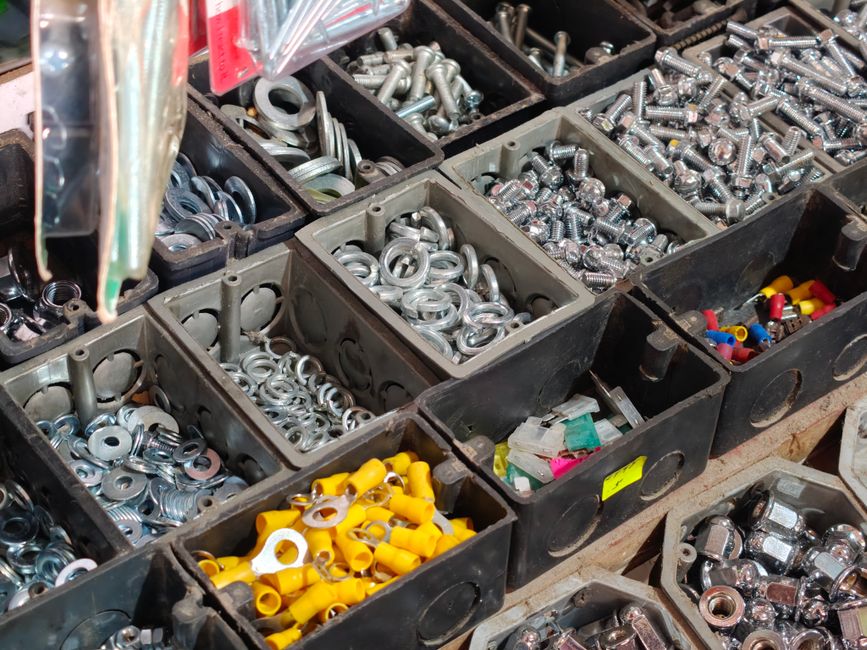
A complex accounting issue for repair contractors is tracking materials, replacement hardware, and van stock. The Internal Revenue Service generally requires businesses holding merchandise inventory to use accrual accounting to track Cost of Goods Sold (COGS). However, under IRS Publication 334 guidelines, qualifying small business contractors under the $32 million threshold can treat job materials as non-incidental materials and supplies.
- Job-Specific Purchases: If you buy a $350 specialized water heater specifically for a scheduled client installation, you can deduct the cost in the year purchased under cash accounting rules.
- Bulk Warehousing & Van Inventory: Buying $4,000 worth of bulk copper fittings, fast-moving fasteners, and electrical wire to store in a workshop or service truck cannot be fully deducted immediately. (A service truck containing $4,000 in unassigned supplies is not a tax shortcut; for IRS purposes, it represents inventory until consumed on a job.)
Field Tech Tools, Software Integration, and Automation for Handyman Bookkeeping

Modern field management platforms have streamlined bookkeeping for field service contractors. Mobile software like Jobber and Housecall Pro sync directly with accounting engines such as QuickBooks Online and Xero. Technicians can generate mobile estimates, collect customer credit card payments on-site, and automatically push line-item invoice data into general ledgers.
Automating mobile invoicing eliminates manual receipt entry and reduces billing delays. (The software demo always shows instant mobile payment; it rarely shows the client explaining why their accounts payable department pays on net-45.) Maintaining clean digital paper trails simplifies professional tax preparation, helping owners assess whether to consult a CPA versus using software as detailed in our guide on hiring an accountant vs TurboTax.
Real-World Accounting Examples for Handyman & Repair Jobs
To see how bookkeeping mechanics work in practice, consider two common trade scenarios across residential and commercial accounts.
Scenario 1: Residential Plumbing & Drywall Job (Cash Basis)
On December 20, 2025, a technician completes a $950 ceiling repair and faucet replacement. The technician pays $220 cash at Home Depot for materials. The client pays the $950 total via credit card processing on January 2, 2026. Under cash basis rules, the $220 material expense is recorded in December 2025, while the $950 income is recorded in January 2026 when funds settle. This lowers 2025 taxable income while deferring tax on revenue into 2026.
Scenario 2: Commercial Maintenance Contract (Accrual Basis)
A repair company services a retail store complex on December 10, 2025, billing $5,000 under net-60 terms. The contractor orders $1,200 in custom replacement motors on credit from a distributor. Under accrual rules, both the $5,000 revenue and $1,200 supplier liability are booked in December 2025. The business reports $3,800 net profit for 2025 and owes income tax on that margin, despite receiving no cash until February 2026.
Frequently Asked Questions
Choosing the right accounting framework ensures long-term operational health for any contractor. The tool belt keeps the jobs moving; the accounting method determines whether you get to keep the profit.
About the Author